Today's
EarthStation1.com 15% Off Commemorative Memorial Title: Japan: A
Cherry Blossom By Many Other Names MP4 Video Download DVD
Today, January 7, 2026
January 7: National Tempura Day: -- Today
celebrates the fact that it is always a yummy time to celebrate
tempura, a fantastic Japanese dish made from deep-frying
vegetables, seafood, or other foods dipped in a light batter of
flour, eggs, and water. Tempura has been with us for about three
centuries. Although the Portuguese living in Nagasaki in the 16th
century introduced it, tempura has become entrenched in Japanese
culture, and you can find tempura everywhere in Japan today. On
this day, you can enjoy tempura in different ways, including with
a dipping sauce or something more experimental like tempura ice
cream. You may be quite familiar with some Japanese dishes like
ramen, sushi, sashimi, and a host of others, but what about the
delectable tempura? You definitely want to know more about this
delicacy! Interestingly, tempura is one of the most commonly
served Japanese dishes inside and outside the shores of Japan.
When Japanese foods are mentioned, the thought of either tempura
or sushi comes to mind. However, how did tempura become so popular
and special to be celebrated? Portuguese missionaries originally
introduced the deep-fried food method of cooking now associated
with tempura in the Japanese city, Nagasaki, in the 1600s. The
original tempura dish was served during Lent, an annual Christian
event where many Christian denominations are forbidden to eat
meat. Remarkably, the name 'tempura' stems from the Latin word 'ad
tempora cuaresme,' meaning "in the time of Lent." The
event was mistaken for the dish's name, and tempura came to stay.
When it was introduced, this method of deep-frying food was not
common and relatively new to Japan. The Japanese caught on to the
new technique and skillfully made art out of it. Tempura today has
become a sought-after snack that accompanies meals in households
and public places. From inception, tempura was made up of minced
meat in a ball shape, fish, and vegetables, but in the 1800s,
Japanese chefs tried frying fish and vegetables together. As a
result, the Japanese culinary style became fully immersed in
tempura and became uniquely Japanese. Today, the preparation and
sales of tempura have become an important part of Japanese
cuisine. Through the transformation of tempura, the Japanese have
shown their brilliance in consolidating foreign foods into unique
Japanese foods. On Sale @ 15% Off Discount Till Midnight PT!
https://store.earthstation1.com/japan-a-cherry-blossom-by-many-other-names-mp4-video-download-dvd.html
Today's
EarthStation1.com 15% Off Commemorative Memorial Title: Life Of
Python Monty Python's Flying Circus Special DVD, Download, USB
Today, January 7, 2026
January 7: National Pass Gas Day: --
Passing gas is one of those things that will make anyone giggle,
from children to adults. Did you know that the gas we pass
contains methane and hydrogen, making them flammable? But not to
worry, you need an insane amount of gas to be able to burst into
flames just from passing gas. So, you can keep on passing as much
gas as you desire. Humans have given several innovative, fun names
and slang terms to the process of passing gas, including fart;
mess; drop a bomb; toot; rip one; break the wind; cut one; cut the
cheese; guff; trump, and break one loose. In most cases, we
consider passing gas as a really bad and disgusting thing to do.
If you 'drop one' near others, they might all look at you with
disapproving eyes. And although it is not hygienic or civil to
pass gas in public places or when we're eating, passing gas is a
very important part of human metabolism. It is a natural
phenomenon and the body's way of passing out waste gasses trapped
in one's belly due to digestion. We produce around 17 to 68 ounces
of gas in our intestines daily and release it through the anus at
intervals. The gas is the by-product of the digestion process and
contains several gasses, including oxygen, methane, nitrogen,
carbon dioxide, hydrogen, and 1% of sulfur (which causes the
smell). The first mention of the word 'fart' was in 1632, meaning
"sending forth wind from the anus." Subsequently,
several other writers and jokesters started using the word and
concept until it became commonplace. Our knowledge of the origin
of National Pass Gas day is sketchy at best. We don't know when it
took off, but now we celebrate the day annually on January 7. It
is a day set aside to giggle at our crazy bodies, create awareness
on the importance of passing gas, and talk about food products
that cause gas secretions like eggs, broccoli, beans, cabbage, and
dairy products. On Sale @ 15% Off Discount Till Midnight PT!
https://store.earthstation1.com/life-of-python-dvd-monty-python39s-flying-circus-documenta39.html
Today's
EarthStation1.com 15% Off Commemorative Memorial Title: Berkeley
In The Sixties DVD, MP4 Video Download, USB Flash Drive
Today, January 7, 2026
January 7: I'm Not Going To Take It
Anymore Day: -- The start of a new year is a good time to reflect
on our lives and decide what we want to change about them. This is
a day dedicated to standing up for yourself. A day of taking
control. It aims to inspire you to start the year with a new
attitude that combines both being strong and honest. You don't
have to be angry to participate; you just have to be true to
yourself and know when you've had enough. Revolution, when viewed
through the lens of political science and history, is a radical
change to an accepted order. This usually refers to the
established government or social institutions. It can be sudden,
sometimes even violent. Change in the form of political, economic,
social, or technological can be brought about by organized
movements. Those who begin revolutions have concluded that the
current institutions in that particular society either no longer
serve their purpose or have failed it entirely. The established
political order is challenged and the eventual replacement is
typically vastly different from it. From ancient Greece to the
European Middle Ages, a revolution was regarded as a destructive
force. Only after a breakdown in the fundamental moral and
religious beliefs was it ever seen as a possibility. When people
become disheartened by the existing situation, it affects the way
they think and feel. Philosophers throughout history had different
views on revolution. Aristotle, the Greek philosopher viewed it as
a desire for honor and equality. Plato believed that a firmly
upheld system of beliefs could prevent it and that a society that
was in social decay was prone to it. In Europe, through the Middle
Ages, the church maintained its authority. Later on during the
Renaissance period, the idea of revolution started to change. It
was seen as necessary for progress. From 1450 to 1750, many
political and philosophical concepts were changing around the
world. People acquired more knowledge and accepted new ideas. Most
countries in Europe were ruled by absolute monarchies and people
started to question this absolute rule, with growing discontent.
The Age of Enlightenment in the 1700s ushered in revolutions all
over the world. These didn't just change the country's political
system. It brought about changes in society as well. On Sale @ 15%
Off Discount Till Midnight PT!
https://store.earthstation1.com/berkeley-in-the-sixties-dvd-1960s-counterculture-ori1960.html
Today's
EarthStation1.com 15% Off Commemorative Memorial Title: The Good
Old Time TV Theme Song MP3 CD, Audio Download, USB Drive
Today, January 7, 2026
January 7: Harlem Globetrotters Day: --
Today we're all pumped up to honor one of the greatest teams in
the history of basketball. Do you know that the Harlem
Globetrotters basketball team is one of 10 basketball teams ever
to make the Naismith Memorial Basketball Hall of Fame? They broke
the color barrier in the NBA and the gender barrier in the
Olympics. This team has given us so much entertainment while doing
what they do best; playing basketball, and we are happy to be
celebrating them. Everyone loves a good game of basketball, the
rollercoaster of beautiful emotions that courses through us as we
watch two teams play against each other and showcase their talent
while we cheer on our favorites. The game has become integral in
our lives, as we play and watch in our schools, parks, at the
stadium, on television, and even at home. Some of the teams have
gone further to help us make lasting, happy memories, one of which
is the Harlem Globetrotters. The game of basketball was developed
in 1891 by James Naismith, a Canadian-American gymnastics teacher
in Springfield, U.S., and became one of the most popular sports in
the world. The game consists of two teams of five separate players
on each side vying against each other to shoot a basketball into
the opponent's hoop while preventing them from shooting through
their own hoop. Abe Saperstein founded the Harlem Globetrotters
basketball team in 1926. They were initially known as the Savoy
Big Five, after the famous Savoy Ballroom in Chicago, where they
held their first performances. The original team members were all
African-Americans from the south side of Chicago, and they didn't
play in Harlem until four decades after the team's formation. The
team embodies qualities of human persistence and creativity.
Founded when professional basketball was exclusively for white
players, they decided to take basketball to another level,
infusing comedy and entertainment. Over the decades, they've won
over 27,000 games! Harlem Globetrotters Day is a day to honor and
remember the achievement of this great basketball team and all
other teams worldwide. On Sale @ 15% Off Discount Till Midnight
PT!
https://store.earthstation1.com/tv-theme-song-mp3-cd-classic-old-time-televisio3.html
Today's
EarthStation1.com 15% Off Commemorative Memorial Title: WABC Radio
Airchecks MP3 Collection 1960s-1980s DVD, MP3 Download, USB
Today, January 7, 2026
January 7, 1844: #BOTD: #HBD! Bernadette
Soubirous (Occitan: Bernadeta Sobiros), also known as Bernadette
Of Lourdes, Roman Catholic saint best known for experiencing
apparitions between February 11 and July 16, 1858 of a "young
lady" who identified herself as "The Immaculate
Conception" and who asked for a chapel to be built at the
nearby cave-grotto (d. April 16, 1879) is #born Marie Bernarde
Soubirous in the market town of Lourdes situated in the High
Pyrenees department of the Hautes-Pyrenees in the Occitanie region
in of southwestern France, the eldest of the nine children of
Francois Soubirous (1807-1871), a miller, and his wife Louise (nee
Casterot; 1825-1866), a laundress. Bernadette was a very sick
child which likely stunted her growth to 4 ft. 7in. tall; she
contracted cholera as a toddler and suffered severe asthma for the
rest of her life. Contrary to a belief popularized by Hollywood
films, Soubirous learned very little French, only studying French
in school after age 13. At that time she could read and write very
little due to her frequent illness. She spoke the language of
Occitan, which was spoken by the local population of the Pyrenees
region at that time and to a residual degree today. Contrary to a
belief popularized by the Hollywood film 1943 film "The Song
Of Bernadette" based on Franz Werfel's 1941 treatment of her
life in his novel of the same name, and the October 13, 1958
television presentation of the Westinghouse Desilu Playhouse "Song
Of Bernadette" on the CBS television network, Soubirous
learned very little French, only studying the language French in
school after age 13. At that time she could read and write very
little due to her frequent illness. She spoke the language of
Occitan, which was spoken by the local population of the Pyrenees
region at that time and to a residual degree today. From February
11 to July 16, 1858, she reported 18 apparitions of "a Lady"
at the grotto of Massabielle, nearly a mile from Lourdes.
Soubirous described the lady as wearing a white veil and a blue
girdle; she had a golden rose on each foot and held a rosary of
pearls. After initial skepticism from the local clergy, these
claims were eventually declared to be worthy of belief by the
Catholic Church after a canonical investigation. The apparition is
known as Our Lady Of Lourdes. After a canonical investigation,
Soubirous's reports were eventually declared "worthy of
belief" on February 18, 1862, and the Marian apparition
became known as Our Lady Of Lourdes. As happened later with the
1917 Marian apparitions in Fatima, Portugal, the primordial
description of the entity made by Bernadette Soubirous was
gradually modified to fit the more familiar Marian iconography
images. In the seer's account, the apparition was a small figure,
a young girl (a "jeune fille"), who looked like a twelve
years old child, who was later transformed by interpreters into a
"lady" of fifteen or even twenty years of age. The
commissioned statue by Joseph Fabisch also failed to capture the
extreme beauty and youth of the apparition, and Bernadette
commented: "too big, too old". In 1866, Soubirous joined
The Sisters Of Charity Of Nevers at their convent in Nevers where
she spent the last years of her life. Soubirous's childhood bout
of cholera left her with severe chronic asthma, and eventually she
contracted tuberculosis of the lungs and bones. For several months
prior to her death, she was unable to take an active part in
convent life. On her deathbed, as she suffered from severe pain
and in keeping with the Virgin Mary's admonition of "Penance,
Penance, Penance," Bernadette proclaimed that "all this
is good for Heaven!" Bernadette Soubirous died of her
long-term illness while praying The Holy Rosary in Nevers at the
age of 35. Her final words were, "Blessed Mary, Mother of
God, Pray for me". Bishop Gauthey of Nevers and the Catholic
Church exhumed the body of Soubirous on September 22, 1909, in the
presence of representatives appointed by the postulators of the
cause, two doctors and a sister of the community. They claimed
that although the crucifix in her hand and her rosary had both
oxidized, her body appeared incorrupt - preserved from
decomposition. This was cited as one of the miracles to support
her canonization. They washed and reclothed her body before
re-burial in the Chapel of St Joseph in a new double casket. The
church exhumed the corpse a second time on April 3, 1919, on the
occasion of the approval of Bernadette's canonization. Dr. Comte,
who examined the body, noted, "The body is practically
mummified, covered with patches of mildew and quite a notable
layer of salts, which appear to be calcium salts. [...] The skin
has disappeared in some places, but it is still present on most
parts of the body." Again, the body was returned to the vault
of St Joseph's chapel. In 1925, the church exhumed the body for a
third time. They took relics, which were sent to Rome. A precise
imprint of the face was molded to make a wax mask based on the
imprints and on some genuine photos to be placed on her body. This
was common practice for relics in France as it was feared that the
blackish tinge to the face and the sunken eyes and nose would be
viewed as corruption by the public. Imprints of the hands were
also taken for the presentation of the body and the making of wax
casts. The remains were then placed in a gold and crystal
reliquary in the Chapel of Saint Bernadette at the main church of
the convent. Pope Pius XI beatified Bernadette Soubirous on June
14, 1925 and canonized her on December 8, 1933. Her feast day,
initially specified as February 18 - the day Mary promised to make
her happy, not in this life, but in the next - is now observed in
most places on the date of her death. The grotto where the
apparitions occurred later went on to become a major pilgrimage
site and Marian shrine known as The Sanctuary Of Our Lady Of
Lourdes, attracting around five million pilgrims of all
denominations each year. Certainly one of the most uplifting and
haunting of Motown's hit records, "Bernadette", recorded
by the Four Tops and written and composed by
Holland-Dozier-Holland, Motown's main songwriting team, and
produced by Brian Holland and Lamont Dozier, was released January
25, 1967, when the 1943 Film "The Song Of Bernadette"
was receiving heavy airplay on American television stations. On
Sale @ 15% Off Discount Till Midnight PT!
https://store.earthstation1.com/wabc-musicradio-shows-mp3-dvd-60s80s-am-360807775.html
Today's
EarthStation1.com 15% Off Commemorative Memorial Title: Hollywood
(1980) Silent Movie History Series DVD, Video Download, USB
Today, January 7, 2026
January 7, 1873: #BOTD: #HBD! Adolph
Zukor, Hungarian-American film producer, co-founded Paramount
Pictures (d. June 10, 1976) is #born into a Jewish family in
Ricse, Hungary, which was then a part of the Austro-Hungarian
Empire. In 1889, at the age of 16, he immigrated to the United
States. Like most immigrants, he began modestly. When he first
landed in New York, he stayed with his family and worked in an
upholstery shop. A friend got him a job as an apprentice at a
furrier. By 1903, fourteen years later, he looked, lived and
earned like a wealthy young burgher. He became involved in the
motion picture industry when in 1903 his cousin, Max Goldstein
approached him for a loan to expand a chain of theaters that began
in Buffalo, New York with Edisonia Hall. The arcade salon, the
Automatic Vaudeville Company on 14th Street in New York City was
to feature Thomas Edison's marvels: phonographs, electric lights
and moving pictures. Zukor not only gave Goldstein the money but
insisted on forming a partnership to open another one. Another
partner in the venture was Marcus Loew, pioneer of the motion
picture industry who formed Loew's Theatres and the
Metro-Goldwyn-Mayer film studio (MGM). In 1912, Adolph Zukor
established Famous Players Film Company: advertising "Famous
Players in Famous Plays". The studio evolved into Famous
Players-Lasky with co-producer Jesse L. Lasky. The Paramount
Pictures Corporation was formed to distribute films made by Famous
Players-Lasky, and a dozen smaller companies pulled into Zukor's
corporate giant. The consolidations led to the formation of a
nationwide film distribution system. And in 1919, the company
bought 135 theaters in the Southern states, making the producing
concern the first that guaranteed exhibition of its own product in
its own theaters. He revolutionized the film industry by
organizing production, distribution, and exhibition within a
single company. Adolph Zukor died of natural causes at his Los
Angeles residence at age 103. He is buried at the Temple Israel
Cemetery in Hastings-on-Hudson, New York. On Sale @ 15% Off
Discount Till Midnight PT!
https://store.earthstation1.com/hollywood-1980-tv-documentary-series-13-shows-4-dual-lay1980134.html
Today's
EarthStation1.com 15% Off Commemorative Memorial Title:
Television: A History Of Broadcast TV DVD MP4 Download USB Drive
Today, January 7, 2026
January 7, 1899: #BOTD: #HBD! Al Bowlly,
Mozambican born South African-British singer, songwriter, arranger
and jazz guitarist, who was popular during the 1930s in Britain
and recorded more than 1,000 songs, the most popular being
"Midnight, the Stars and You", "Goodnight,
Sweetheart", "Close Your Eyes", "The Very
Thought of You", "Guilty", "Heartaches",
"Love Is the Sweetest Thing", and the only English
version of "Dark Eyes" by Adalgiso Ferraris as "Black
Eyes" with the words of Albert Mellor (d. April 17, 1941) is
#born Albert Allick Bowlly in Lourenco Marques (today Maputo) in
the Portuguese colony of Mozambique. His father, Alick Pauli, was
Greek by nationality, and by religion was Greek Orthodox; Al's
mother, born Miriam Ayoub-NeeJame, was Lebanese by nationality,
and Catholic by religion. They met en route to Australia, and
moved to South Africa. Bowlly was brought up in Johannesburg.
After a series of odd jobs in South Africa, including barber and
jockey, he sang in a dance band led by Edgar Adeler on a tour of
South Africa, Rhodesia, India and the Dutch East Indies during the
mid-1920s. He was fired from the band in Soerabaja, Dutch East
Indies. Jimmy Liquime hired him to sing with the band in India and
Singapore. In 1927 Bowlly made his first record, a cover version
of "Blue Skies" by Irving Berlin that was recorded with
Adeler in Berlin, Germany. During the next year, he worked in
London, with the orchestra of Fred Elizalde. The onset of the
Great Depression in 1929 resulted in Bowlly losing his job; he
returned to several months of busking to survive. In the 1930s, he
signed two contracts - one in May 1931 with Roy Fox, singing in
his live band for the Monseigneur Restaurant, a stylish restaurant
on Piccadilly in London, the other a record contract with
bandleader Ray Noble in November 1930. During the next four years,
he recorded over 500 songs. By 1933, Lew Stone had ousted Fox as
the Monseigneur's bandleader and Bowlly was singing Stone's
arrangements with Stone's band. After much radio exposure and a
successful British tour with Stone, Bowlly was inundated with
demands for appearances and gigs - including undertaking a solo
British tour - but continued to make most of his recordings with
Noble. There was considerable competition between Noble and Stone
for Bowlly's time. For much of the year, Bowlly spent the day in
the recording studio with Noble's band, rehearsing and recording,
then the evening with Stone's band at the Monseigneur. Many of
these recordings with Noble were issued in the United States by
Victor, which meant that by the time Noble and Bowlly came to
America, their reputation had preceded them. Bowlly performed in
England with his band, the Radio City Rhythm Makers. By 1937, the
band had broken up when vocal problems were traced to a wart in
his throat, briefly causing him to lose his voice. Separated from
his wife and with his band dissolved, he borrowed money from
friends and travelled to New York City for surgery. His absence
from the UK in the early 1930s damaged his popularity with British
audiences, despite his association with pianist Monia Liter as his
accompanist. His career began to suffer as a result of problems
with his voice, which affected the frequency of his recordings. He
played a few small parts in films, but the parts were often cut
and scenes that were shown were brief. Noble was offered a role in
Hollywood, although the offer excluded Bowlly because a singer had
already been hired. Bowlly moved back to London with his wife
Marjie in January 1937. With diminished success in Britain, he
toured regional theatres and recorded as often as possible to make
a living, moving from orchestra to orchestra, working with Sydney
Lipton, Geraldo and Ken "Snakehips" Johnson. In 1940,
there was a revival of interest in his career when he worked in a
duo with Jimmy Messene in Radio Stars with Two Guitars on the
London stage. It was his last venture before his death in April
1941. The partnership was uneasy; Messene was an alcoholic and he
was occasionally unable to perform. Bowlly recorded his last song
two weeks before his death. It was a duet with Messene of Irving
Berlin's satirical song about Hitler, "When That Man Is Dead
and Gone". In December 1931, Bowlly married Constance Freda
Roberts (died 1934) in St Martin's Register Office, London; the
couple separated after a fortnight and sought a divorce. He
remarried in December 1934 to Marjie Fairless; this marriage
lasted until his death. On April 16 1941, Bowlly and Messene had
given a performance at the Rex Cinema in Oxford Street, High
Wycombe. Both were offered an overnight stay in town, but Bowlly
took the last train home to his flat at 32 Duke Street, Duke's
Court, St James, London. Al Bowlly died when he was killed by a
Luftwaffe parachute mine that detonated outside his flat at ten
past three in the morning. His body appeared unmarked; although
the explosion had not disfigured him, it had blown his bedroom
door off its hinges, and the impact against his head was fatal. He
was buried with other bombing victims in a mass grave at Hanwell
Cemetery, Uxbridge Road, Hanwell, where his name is given as
Albert Alex Bowlly. A blue plaque commemorating Bowlly was
installed in November 2013 by English Heritage at Charing Cross
Mansion, 26 Charing Cross Road, described as "his home at the
pinnacle of his career". On Sale @ 15% Off Discount Till
Midnight PT!
https://store.earthstation1.com/television-1988-tv-documentary-series-8-shows-4-dual-laye198884.html
Today's
EarthStation1.com 15% Off Commemorative Memorial Title: Ratlines
WWII Escape Routes For Fascist War Criminals MP4 Download DVD
Today, January 7, 2026
January 7, 1929: Croatia: The History Of
Croatia: Fascism: The History Of Fascism: Fascism In Croatia: The
Interwar Period (The Aftermath Of World War I, The Interbellum,
Between The Wars): The Ustase (Ustasha, Ustashe) (Croatian: "The
Risen Up", Plural Of Ustasa, "Rise Up"; Officially
Ustasa - Croatian Revolutionary Movement [Croatian: Ustasa -
Hrvatski Revolucionarni Pokret]): -- The Ustase (pronounced
"oo-STASH-yah"), a Croatian fascist, ultranationalist
and terroist organization, active as single organization between
1929 and 1945 (Dissolved De Facto May 25, 1945) is founded. From
its inception and before the Second World War, the organization
engaged in a series of terrorist activities against the Kingdom of
Yugoslavia, including collaborating with IMRO to assassinate King
Alexander I of Yugoslavia in 1934. During World War II in
Yugoslavia, the Ustase went on to perpetrate the Holocaust and
genocide against its Jewish, Serb and Roma populations, killing
hundreds of thousands of Serbs, Jews, Roma, as well as Muslim and
Croat political dissidents. The ideology of the movement was a
blend of fascism, Roman Catholicism and Croatian ultranationalism.
The Ustase supported the creation of a Greater Croatia that would
span the Drina River and extend to the border of Belgrade. The
movement advocated a racially "pure" Croatia and
promoted genocide against Serbs-due to the Ustase's anti-Serb
sentiment-and Holocaust against Jews and Roma via Nazi racial
theory, and persecution of anti-fascist or dissident Croats and
Bosniaks. The Ustase viewed the Bosniaks as "Muslim Croats",
and as a result, Bosniaks were not persecuted on the basis of
race. The Ustase espoused Roman Catholicism and Islam as the
religions of the Croats and condemned Orthodox Christianity, which
was the main religion of the Serbs. Roman Catholicism was
identified with Croatian nationalism, while Islam, which had a
large following in Bosnia and Herzegovina, was praised by the
Ustase as the religion that "keeps true the blood of Croats."
It was founded as a nationalist organization that sought to create
an independent Croatian state. It functioned as a terrorist
organization before World War II. After the invasion of Yugoslavia
in April 1941, the Ustase came to power when they were appointed
to rule a part of Axis-occupied Yugoslavia as the Independent
State of Croatia (NDH), a quasi-protectorate puppet state
established by Fascist Italy and Nazi Germany. The Ustase Militia
(Croatian: Ustaska vojnica) became its military wing in the new
state. The Ustase regime was militarily weak and failed to ever
attain significant support among Croats. Therefore, terror was
their means of controlling the "ethnically disparate"
population. The Ustase regime was initially backed by some parts
of the Croat population that in the interwar period had felt
oppressed by the Serb-led Yugoslavia, but their brutal policies
quickly alienated many ordinary Croats and resulted in a loss of
the support they had gained by creating a Croatian national state.
With the German surrender, end of World War II in Europe, and the
establishment of socialist Yugoslavia in 1945, the Ustase movement
and their state totally collapsed. Many members of the Ustase
militia and Croatian Home Guard who subsequently fled the country
were taken as prisoners of war and subjected to forced marches and
executions during the Bleiburg repatriations. Various underground
and exile successor organisations created by former Ustase
members, such as the Crusaders and the Croatian Liberation
Movement, tried to continue the movement to little success. On
Sale @ 15% Off Discount Till Midnight PT!
https://store.earthstation1.com/ratlines-wwii-escape-routes-for-fascist-war-criminals-mp4-download-dvd.html
Today's
EarthStation1.com 15% Off Commemorative Memorial Title: Buck
Rogers 1939 All 12 Episodes Buster Crabbe DVD, MP4, USB Stick
Today, January 7, 2026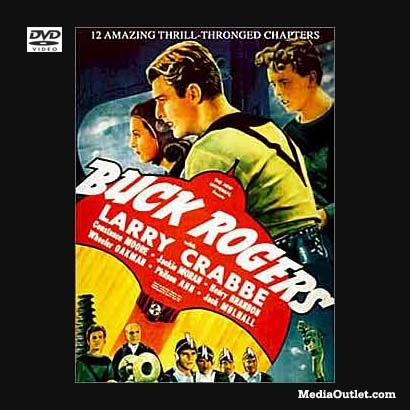
January 7, 1929: First Publications: --
Buck Rogers In The 25th Century first published. Buck Rogers is a
science fiction (and later, particularly space opera) character
created by Philip Francis Nowlan in the novella Armageddon 2419
A.D., subsequently appearing in multiple media. First published in
the August 1928 issue of the pulp magazine Amazing Stories, the
character and story were shortly adapted into a syndicated comic
strip which debuted in early 1929. Other adaptations included
radio in 1932, a serial film, a television series, and other
formats. The Buck Rogers strip, syndicated by the John F. Dille
Co., was popular enough to inspire other newspaper syndicates to
launch their own science fiction strips. The most famous of these
imitators was Flash Gordon (King Features Syndicate, 1934-2003);
others included Brick Bradford (Central Press Association,
1933-1987), Don Dixon and the Hidden Empire (Watkins Syndicate,
1935-1941), and Speed Spaulding (John F. Dille Co., 1940-1941).
John Carter of Mars (United Feature Syndicate, 1941-1943) was
introduced in 1941 based on an Edgar Rice Burroughs character
first seen in 1912. The adventures of Buck Rogers in comic strips,
movies, radio, and television became an important part of American
popular culture. Buck Rogers has been credited with bringing into
popular media the concept of space exploration, following in the
footsteps of literary pioneers such as Jules Verne and H. G.
Wells. It was on January 22, 1930, that Buck Rogers first ventured
into space aboard a rocket ship in his fifth newspaper comic story
Tiger Men from Mars. This popular phenomenon paralleled the
development of space technology in the 20th century and introduced
Americans to outer space as a familiar environment for
swashbuckling adventure. On Sale @ 15% Off Discount Till Midnight
PT!
https://store.earthstation1.com/buck-rogers-1939-all-12-episodes-larry-buster-crab193912.html
Today's
EarthStation1.com 15% Off Commemorative Memorial Title: The Flash
Gordon Movie & Radio SuperMegaSet DVD, MP3, MP4, USB Drive
Today, January 7, 2026
January 7, 1934: First Publications: --
Flash Gordon first published, inspired by, and created to compete
with, the already established Buck Rogers adventure strip. Flash
Gordon is the protagonist of a space opera adventure comic strip
created by and originally drawn by Alex Raymond. First published
January 7, 1934, the strip was inspired by, and created to compete
with, the already established Buck Rogers adventure strip. The
Flash Gordon comic strip has been translated into a wide variety
of media, including motion pictures, television, and animated
series. The latest version, a Flash Gordon television series,
appeared on the Sci-Fi Channel in the United States in 2007-2008.
On Sale @ 15% Off Discount Till Midnight PT!
https://store.earthstation1.com/all-flash-gordon-movie-serials-dvd-set--all-radio-mp3s-4-discsh34.html
Today's
EarthStation1.com 15% Off Commemorative Memorial Title: Between
The Wars TV Documentary Series DVD, Video Download, USB Drive
Today, January 7, 2026
January 7, 1940: The European Civil War:
World War II: The Second European War (The European Theater Of
World War II): The Winter War (The Russo-Finnish War): -- The
Finnish 9th Division stops and completely destroys the numerically
superior Soviet forces on the Raate-Suomussalmi road in The Battle
Of Raate Road, a battle fought during the Winter War between the
Soviet Union and Finland in January 1940, as a part of The Battle
Of Suomussalmi. On December 7, 1939, the Soviet 163rd Rifle
Division captured Suomussalmi, but found itself trapped deep
inside Finnish territory, and the Soviet 44th Rifle Division was
sent to aid the 163rd. Over the next week, Colonel Hjalmar
Siilasvuo's outnumbered 9th Division stopped and decisively
defeated the Soviet forces on the Raate-Suomussalmi road. On Sale
@ 15% Off Discount Till Midnight PT!
https://store.earthstation1.com/between-the-wars-dvd-set-all-16-tv-shows-4-discs164.html
Today's
EarthStation1.com 15% Off Commemorative Memorial Title: Heroes
Still... The Bataan Death March DVD, MP4 Download, USB Drive
Today, January 7, 2026
January 7, 1942: World War II: The
Pacific War (The Asia-Pacific War, The Asiatic-Pacific Theater,
The Pacific Theater Of World War II): The Pacific Ocean Theater Of
World War II: The Southwest Pacific Theater Of World War II: The
Philippines Campaign (1941-1942) (The Battle Of The Philippines,
The Fall Of The Philippines): The Battle Of Bataan (The Fall Of
Bataan): -- The Battle Of Bataan (January 7 - April 19, 1942), the
most intense phase of Imperial Japan's invasion of the Philippines
during World War II, begins. In January 1942, forces of the
Imperial Japanese Army and Navy invaded Luzon along with several
islands in the Philippine Archipelago after the bombing of the
American naval base at Pearl Harbor. The Commander-In-Chief of all
Filipino and U.S. forces in the islands, General Douglas
MacArthur, consolidated all of his Luzon-based units on the Bataan
Peninsula to fight against the Japanese invaders. By this time,
the Japanese controlled nearly all of Southeast Asia. Despite a
lack of supplies, Filipino and American forces managed to fight
the Japanese for three months, engaging them initially in a
fighting retreat southward. The delay caused by their valiant and
determined resistance -- bringing about a comradery between the
men of arms of both countries that was to remain a steadfast
bastion of Filipino-American relations for decades to come - cost
the Japanese valuable time and prevented their immediate victory
across the Pacific. The surrender at Bataan, with 76,000 soldiers
surrendering in the Philippines altogether, was the largest in
American and Filipino military histories, and was the largest
United States surrender since the American Civil War's Battle of
Harper's Ferry. On April 9, 142, a date commemorated as The Day Of
Valor (Filipino: Araw Ng Kagitingan) (Bataan Day [Fall Of Bataan
Day, Bataan Death March Commemoration Day]), the Bataan peninsula,
which along with the island of Corregidor were the last remaining
Allied strongholds in the Philippines, fell to the Imperial
Japanese Army's final assault, which had begun on April 3, on the
combined Filipino and American forces making their determined last
stand there. The Fall Of Bataan was also the beginning of The
Bataan Death March, when American and Filipino prisoners were
forced on a six day march, beginning at Mariveles Airfield to Camp
O'Donnell in Cabanatuan with various susidiary marches joining it
from San Fernando, Bagac and the Capas Train Station. 76,000
Allied POWs including 12,000 Americans were forced to walk 60
miles under a blazing sun without food or water to the POW camp,
resulting in over 5,000 American deaths. A national holiday in the
Philippines, The Day Of Valor (Araw Ng Kagitingan), previously
called Bataan Day, commemorates The Fall Of Bataan, and came to
also commemorate The Fall Of Corregidor. The Dambana Ng Kagitingan
(Shrine Of Valor, Shrine Of Courage; official name Mount Samat
National Shrine) is a historical shrine located near the summit of
Mount Samat in the town of Pilar, Province of Bataan, in the
Philippines. The memorial shrine complex was built to honor and
remember the gallantry of Filipino and American soldiers who
fought against the Imperial Japanese Army during World War II. The
memorial grounds feature a colonnade that houses an altar, an
esplanade, and a museum, and on the peak of the mountain is a
memorial cross standing about 311 feet (95 m) high. On Sale @ 15%
Off Discount Till Midnight PT!
https://store.earthstation1.com/heroes-still-the-bataan-death-march-dvd-mp4-us4.html
Today's
EarthStation1.com 15% Off Commemorative Memorial Title: George S.
Patton Documentaries DVD, Video Download, USB Flash Drive
Today, January 7, 2026
January 7, 1945: The European Civil War:
World War II: The Second European War (The European Theater Of
World War II): The Western Front Of World War II: The Battle Of
The Bulge (The Ardennes Offensive): -- British General Bernard
Montgomery, bringing to the fore the behind-the-scenes battle
between himself and American generals generally and General George
S. Patton especially, holds a press conference in which he
ridiculously claims that he was the primary force that led to the
victory in the Battle Of The Bulge, the last major offensive of
the German Army which was halted after a major Allied
counter-attack, a patently false claim for which he was widely
roundly ridiculed among the Allied powers. Montgomery came to see
the press conference as a mistake. "Distorted or not, I think
now that I should never have held that press conference. So great
were the feelings against me on the part of the American generals
that whatever I said was bound to be wrong. I should therefore
have said nothing." Eisenhower commented in his own memoirs:
"I doubt if Montgomery ever came to realize how resentful
some American commanders were. They believed he had belittled them
-- and they were not slow to voice reciprocal scorn and contempt."
British Prime Minister Winston Churchill, for his part, and for
the record, addressed the House Of Commons following the Battle Of
The Bulge, saying: "This is undoubtedly the greatest American
battle of the war and will, I believe, be regarded as an
ever-famous American victory." Allied Supreme Commander,
General Dwight D. Eisenhower at a meeting of the senior Commanders
of his forces on December 19 1944, realizing that the Allies could
destroy German forces much more easily when they were out in the
open and on the offensive than if they were on the defensive, told
his generals, "The present situation is to be regarded as one
of opportunity for us and not of disaster. There will be only
cheerful faces at this table." Patton, realizing what
Eisenhower implied, responded, "Hell, let's have the guts to
let the bastards go all the way to Paris. Then, we'll really cut
'em off and chew 'em up." Eisenhower, after saying he was not
that optimistic, asked Patton how long it would take to turn his
Third Army (located in northeastern France) north to
counterattack. Patton replied that he could attack with two
divisions within 48 hours, to the disbelief of the other generals
present. However, before he had gone to the meeting, Patton had
ordered his staff to prepare three contingency plans for a
northward turn in at least corps strength. By the time Eisenhower
asked him how long it would take, the movement was already
underway. Patton's forces marched and drove through the night
without hot food or rest to get to the battle. Montgomery and his
forces didn't enter into any of this. The battle between Monty and
Patton had gone on throughout the war. First in Africa, then in
Italy and finally in France and Germany. Both men seemed to have a
certain distain for each other's styles, and both were eager to
seek publicity and acclaim for their successes. On Sale @ 15% Off
Discount Till Midnight PT!
https://store.earthstation1.com/patton-dvd-general-george-s-dual-layer-wwii-documentaries.html
Today's
EarthStation1.com 15% Off Commemorative Memorial Title:
Unidentified Flying Objects 1956 Movie/Bonus Al Chop Interview MP4
DVD
Today, January 7, 2026
January 7, 1948: UFO Incidents
(Unidentified Flying Object Incidents): UFO Aviation Incidents
(Unidentifed Fly Object Aviation Incidents): Aviation Incidents
And Accidents: The Mantell UFO Incident: -- Kentucky Air National
Guard pilot Thomas Mantell crashes while in pursuit of a supposed
UFO. The Mantell UFO Incident was among the most publicized early
UFO reports. Historian David M. Jacobs argues the Mantell case
marked a sharp shift in both public and governmental perceptions
of UFOs. Previously, the news media often treated UFO reports with
a whimsical or glib attitude reserved for "silly season
news". Following Mantell's death, however, Jacobs notes "the
fact that a person had died in an encounter with an alleged flying
saucer dramatically increased public concern about the phenomenon.
Now a dramatic new prospect entered thought about UFOs: they might
be not only extraterrestrial but potentially hostile as well."
An investigation by the United States Air Force's Project Blue
Book indicated that Mantell may have died chasing a Skyhook
balloon, which in 1948 was a top-secret project that Mantell would
not have known about. The Air Force cooperated in the production
of the 1956 Hollywood film "Unidentified Flying Objects The
True Story Of Flying Saucers", which handles this incident at
length. On Sale @ 15% Off Discount Till Midnight PT!
https://store.earthstation1.com/unidentified-flying-objects-the-true-story-of-flying-saucers-dvd.html
Today's
EarthStation1.com 15% Off Commemorative Memorial Title: Marian
Anderson Documentary DVD, MP4 Video Download, USB Flash Drive
Today, January 7, 2026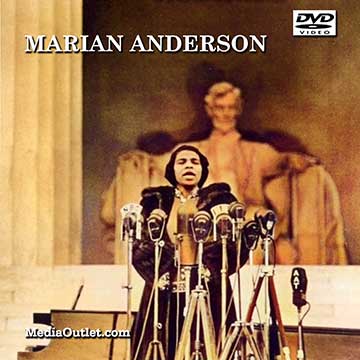
January 7, 1955: First African Americans:
-- Contralto Marian Anderson becomes the first person of color to
perform at the Metropolitan Opera in Giuseppe Verdi's Un Ballo In
Maschera (A Masked Ball). At the invitation of director Rudolf
Bing, she sang the part of Ulrica, opposite Zinka Milanov and
Herva Nelli, as Amelia. Anderson later said about the evening,
"The curtain rose on the second scene and I was there on
stage, mixing the witch's brew. I trembled, and when the audience
applauded and applauded before I could sing a note, I felt myself
tightening into a knot." Although she never appeared with the
company again, Anderson was named a permanent member of the
Metropolitan Opera company. On Sale @ 15% Off Discount Till
Midnight PT!
https://store.earthstation1.com/marian-anderson-dvd-documentary.html
Today's
EarthStation1.com 15% Off Commemorative Memorial Title: The Shah
Of Iran Mohammad Reza Pahlavi + Bonus MP4 Download DVD
Today, January 7, 2026
January 7, 1978: The Aftermath Of World
War II: The Cold War: The Iranian Revolution: -- The Iranian
Revolution begins when an article titled "Iran And Red And
Black Colonization" appeared in the national daily Ettela'at
newspaper. Written under a pseudonym by a government agent, it
denounced Khomeini as a "British agent" and a "mad
Indian poet" conspiring to sell out Iran to neo-colonialists
and communists. Upon the publishing of the article, religious
seminary students in the city of Qom, angered over the insult to
Khomeini, clashed with police. According to the government, 2 were
killed in the clash; according to the opposition, 70 were killed
and over 500 were injured. Likewise, there are discrepancies
between casualty figures in different sources. According to the
Shi'ite customs, memorial services (chehelom) are held 40 days
after a person's death. Encouraged by Khomeini (who declared that
the blood of martyrs must water the "tree of Islam"),
radicals pressured the mosques and moderate clergy to commemorate
the deaths of the students, and used the occasion to generate
protests. The informal network of mosques and bazaars, which for
years had been used to carry out religious events, increasingly
became consolidated as a coordinated protest organization. On
February 18, 40 days after Qom clashes, demonstrations broke out
in various different cities. The largest was in Tabriz, which
descended into a full-scale riot. "Western" and
government symbols such as cinemas, bars, state-owned banks, and
police stations were set ablaze. Units of Imperial Iranian Army
were deployed to the city to restore order, and the death toll,
according to government was 6, while Khomeini claimed hundreds
were "martyred." Forty days later, on March 29,
demonstrations were organized in at least 55 cities, including
Tehran. In an increasingly predictable pattern, deadly riots broke
out in major cities, and again 40 days later, on May 10. It led to
an incident in which army commandos opened fire on Ayatollah
Shariatmadari's house, killing one of his students. Shariatmadari
immediately made a public announcement declaring his support for a
"constitutional government," and a return to the
policies of the 1906 Constitution. The Shah was taken completely
by surprise by the protests and, to make matters worse, he often
became indecisive during times of crisis; virtually every major
decision he would make backfired on his government and further
inflamed the revolutionaries. The Iranian Revolution (Persian:
Enqelabe Iran), locally known as the Islamic Revolution or the
1979 Revolution, was a series of events that culminated in the
overthrow of the Pahlavi dynasty under Shah Mohammad Reza Pahlavi,
and the replacement of his government with an Islamic republic
under the Grand Ayatollah Ruhollah Khomeini, a leader of one of
the factions in the revolt. The revolution was supported by
various Islamist and leftist organizations and student movements.
Demonstrations against the Shah commenced in October 1977,
developing into a campaign of civil resistance that included both
secular and religious elements. The protests rapidly intensified
in 1978 as a result of the burning of Rex Cinema which was seen as
the trigger of the Revolution, and between August and December
that year, strikes and demonstrations paralyzed the country. The
Shah left Iran in exile on January 16, 1979, as the last Persian
monarch, leaving his duties to a regency council and Shapour
Bakhtiar, who was an opposition-based prime minister. Ayatollah
Khomeini was invited back to Iran by the government, and returned
to Tehran to a greeting by several thousand Iranians. The royal
reign collapsed shortly after, on February 11, when guerrillas and
rebel troops overwhelmed troops loyal to the Shah in armed street
fighting, bringing Khomeini to official power. Iran voted by
national referendum to become an Islamic republic on April 1, 1979
and to formulate and approve a new theocratic-republican
constitution whereby Khomeini became supreme leader of the country
in December 1979. The revolution was unusual for the surprise it
created throughout the world. It lacked many of the customary
causes of revolution (defeat in war, a financial crisis, peasant
rebellion, or disgruntled military); occurred in a nation that was
experiencing relative prosperity; produced profound change at
great speed; was massively popular; resulted in the exile of many
Iranians; and replaced a pro-Western authoritarian monarchy with
an anti-Western theocracy based on the concept of velayat-e faqih
(Guardianship of the Islamic Jurists). It was a relatively
nonviolent revolution, and it helped to redefine the meaning and
practice of modern revolutions (although there was violence in its
aftermath). On Sale @ 15% Off Discount Till Midnight PT!
https://store.earthstation1.com/mohammad-reza-pahlavi-the-politics-of-oil-shah-of-iran--dvd.html
Today's
EarthStation1.com 15% Off Commemorative Memorial Title: Cambodia:
The Khmer Rouge And The Cambodian Genocide DVD MP4 USB Drive
Today, January 7, 2026
January 7, 1979: The Aftermath Of World
War II: The Cold War: The Cold War In Asia: The Indochina Wars:
The Sino-Vietnamese War (The Third Indochina War): The
Cambodian-Vietnamese War: -- Phnom Penh falls to the advancing
Vietnamese troops, driving out Pol Pot and the Khmer Rouge. The
Sino-Vietnamese War, also known as the Third Indochina War, was a
brief border war fought between the People's Republic Of China and
the Socialist Republic of Vietnam in early 1979. China launched
the offensive in response to Vietnam's invasion and occupation of
Cambodia in 1978. Vietnam's intervention ended the rule of the
Chinese-backed Khmer Rouge. The Cambodian-Vietnamese War was an
armed conflict between the Socialist Republic of Vietnam and
Democratic Kampuchea (Cambodia). The war began with isolated
clashes along the land and maritime boundaries of Vietnam and
Kampuchea between 1975 and 1977, occasionally involving
division-sized military formations. On 25 December 1978, Vietnam
launched a full-scale invasion of Kampuchea and subsequently
occupied the country and removed the Khmer Rouge government from
power. This intervention ended the genocide that the Khmer Rouge
was inflicting upon the people of Cambodia. On Sale @ 15% Off
Discount Till Midnight PT!
https://store.earthstation1.com/cambodia-the-khmer-rouge-and-the-cambodian-genocide-dvd-mp4-usb-driv4.html
Today's
EarthStation1.com #OnThisDay Commemorative Memorial Title: The
Making Of A Continent TV Series DVD, MP4 Download, USB Drive
Today, January 7, 2026 January 7: Old Rock Day: -- Today we
remember the Earth's incredible history and to pay tribute to the
amazing geologists who help us understand it. We've been dependent
on rocks since we first walked the Earth, and today it's no
different, with rocks forming the foundation of our daily lives.
So if you want to revel in remarkable old rocks, or sit back and
spend time with a stone, we've got some polished ideas for making
your Old Rock Day a hard one to forget. The study of rocks was
first introduced by the Ancient Greek Theophrastus in his work,
"Peri Lithon" ("On Stones"), and became the
cornerstone of geology for other interested scientists. The study
was advanced by Pliny the Elder, who recorded numerous minerals
and metals in great detail, with a particular focus on their
practical use. Although working without the tools we use today,
Pliny was able to correctly identify the origin of amber as
fossilized tree resin. It wasn't until 1603 when the word
'geology' was used for the first time by Italian naturalist Ulisse
Aldrovandi. It took a further 150 years for the first geological
maps to be drawn by British geologist William Smith, whose work
began the process of ordering rock layers by examining the fossils
contained in them. Then, in 1785, James Hutton wrote and presented
a paper to the Royal Society of Edinburgh called 'Theory of the
Earth', which outlined his belief that the world was far older
than previously thought. His breakthroughs make him widely
considered the first modern geologist. In 1809 William Maclure
produced the first geological map of the USA, a task he completed
thanks to two painstaking years spent personally traversing the
country. With the invention of radiometric dating in the early
20th century, scientists could finally provide an accurate figure
for the age of the earth by tracing the radioactive impurities
found in rocks. It helped scientists to see that the Earth is one
very old rock indeed! Rocks have been essential for human
development, which is why we celebrate Old Rock Day and the wonder
of the geological world.
https://store.earthstation1.com/the-making-of-a-continent-2-dual-layer-dvd-set-all-6-episod26.html
January 7: Old Rock Day: -- Today we
remember the Earth's incredible history and to pay tribute to the
amazing geologists who help us understand it. We've been dependent
on rocks since we first walked the Earth, and today it's no
different, with rocks forming the foundation of our daily lives.
So if you want to revel in remarkable old rocks, or sit back and
spend time with a stone, we've got some polished ideas for making
your Old Rock Day a hard one to forget. The study of rocks was
first introduced by the Ancient Greek Theophrastus in his work,
"Peri Lithon" ("On Stones"), and became the
cornerstone of geology for other interested scientists. The study
was advanced by Pliny the Elder, who recorded numerous minerals
and metals in great detail, with a particular focus on their
practical use. Although working without the tools we use today,
Pliny was able to correctly identify the origin of amber as
fossilized tree resin. It wasn't until 1603 when the word
'geology' was used for the first time by Italian naturalist Ulisse
Aldrovandi. It took a further 150 years for the first geological
maps to be drawn by British geologist William Smith, whose work
began the process of ordering rock layers by examining the fossils
contained in them. Then, in 1785, James Hutton wrote and presented
a paper to the Royal Society of Edinburgh called 'Theory of the
Earth', which outlined his belief that the world was far older
than previously thought. His breakthroughs make him widely
considered the first modern geologist. In 1809 William Maclure
produced the first geological map of the USA, a task he completed
thanks to two painstaking years spent personally traversing the
country. With the invention of radiometric dating in the early
20th century, scientists could finally provide an accurate figure
for the age of the earth by tracing the radioactive impurities
found in rocks. It helped scientists to see that the Earth is one
very old rock indeed! Rocks have been essential for human
development, which is why we celebrate Old Rock Day and the wonder
of the geological world.
https://store.earthstation1.com/the-making-of-a-continent-2-dual-layer-dvd-set-all-6-episod26.html
Today's
EarthStation1.com #OnThisDay Commemorative Memorial Title:
Portraits Of American Presidents Nos. 1-42 TV Series MP4 Download
DVD
Today, January 7, 2026January 7, 1800: #BOTD: #HBD! Millard
Fillmore, American lawyer and politician, 13th President of the
United States (d. March 8, 1874 is #born on January 7, 1800, in a
log cabin, on a farm in what is now Moravia, in the Finger Lakes
region of New York. Serving as the 13th president of the United
States from 1850 to 1853, he was the last to be a member of the
Whig Party while in the White House. A former member of the U.S.
House of Representatives from upstate New York, Fillmore was
elected as the 12th vice president in 1848, and succeeded to the
presidency in July 1850 upon the death of Zachary Taylor. Fillmore
was instrumental in passing the Compromise of 1850, a bargain that
led to a brief truce in the battle over the expansion of slavery.
He failed to win the Whig nomination for president in 1852 but
gained the endorsement of the nativist Know Nothing Party four
years later and finished third in the 1856 presidential election.
Fillmore was born into poverty in the Finger Lakes area of upstate
New York. His parents were tenant farmers during his formative
years. Though he had little formal schooling, he studied
diligently to become a lawyer. He became prominent in the Buffalo
area as an attorney and politician, and was elected to the New
York Assembly in 1828 and to the House of Representatives in 1832.
Fillmore initially belonged to the Anti-Masonic Party, but became
a member of the Whig Party as formed in the mid-1830s. He was a
rival for the state party leadership with the editor Thurlow Weed
and his protege William H. Seward. Throughout his career, Fillmore
declared slavery evil but said it was beyond the federal
government's power to end it. Seward was openly hostile to slavery
and argued that the federal government had a role to play in
ending it. Fillmore was an unsuccessful candidate for Speaker of
the U.S. House of Representatives when the Whigs took control of
the chamber in 1841, but was made chairman of the Ways and Means
Committee. Defeated in bids for the Whig nomination for vice
president in 1844 and for New York governor the same year,
Fillmore was elected Comptroller of New York in 1847, the first to
hold that post by direct election. As vice president, Fillmore was
largely ignored by Taylor; even in dispensing patronage in New
York, Taylor consulted Weed and Seward. But in his capacity as
president of the Senate, Fillmore presided over its angry debates,
as the 31st Congress decided whether to allow slavery in the
Mexican Cession. Unlike Taylor, Fillmore supported Henry Clay's
omnibus bill, the basis of the 1850 Compromise. Upon becoming
president in July 1850, he dismissed Taylor's cabinet and pushed
Congress to pass the compromise. The Fugitive Slave Act,
expediting the return of escaped slaves to those who claimed
ownership, was a controversial part of the compromise. Fillmore
felt duty-bound to enforce it, though it damaged his popularity
and also the Whig Party, which was torn between its Northern and
Southern factions. In foreign policy, he supported U.S. Navy
expeditions to open trade in Japan, opposed French designs on
Hawaii, and was embarrassed by Narciso Lopez's filibuster
expeditions to Cuba. Fillmore sought the Whig nomination for a
full term in 1852 but was passed over in favor of Winfield Scott.
As the Whig Party broke up after Fillmore's presidency, he and
many in its conservative wing joined the Know Nothings and formed
the American Party. Despite his party's emphasis on
anti-immigration and anti-Catholic policies, during his 1856
candidacy, he said little about immigration, focusing on the
preservation of the Union, and won only Maryland. During the
American Civil War, Fillmore denounced secession and agreed that
the Union must be maintained by force if necessary, but was
critical of Abraham Lincoln's war policies. After peace was
restored, he supported President Andrew Johnson's Reconstruction
policies. Fillmore remained involved in civic interests in
retirement, including as chancellor of the University of Buffalo,
which he had helped found in 1846. Historians consistently rank
Fillmore among the worst presidents in American history, largely
for his policies regarding slavery, as well as among the least
memorable. His association with the Know Nothings and support of
Johnson's reconstruction policies further tarnished his reputation
and legacy. Millard Fillmore died of a stroke in Buffalo, New
York, aged 74. Two days later, he was buried at Forest Lawn
Cemetery in Buffalo after a funeral procession including hundreds
of others. The U.S. Senate sent three of its members to honor
Fillmore, including former vice president Hannibal Hamlin.
https://store.earthstation1.com/portraits-of-american-presidents-nos-142-tv-series-mp4-download1424.html
Today's
EarthStation1.com #OnThisDay Commemorative Memorial Title:
Hirohito: Behind The Myth War Responsiblity MP4 Download DVD
Today, January 7, 2026January 7, 1989: #DOTD: Hirohito, 124th
Emperor of Japan according to the traditional order of succession,
reigning from December 25, 1926, until his death (b. April 29,
1901) #dies at the age of 87 at Fukiage Palace, Japan at 6:33 AM
of duodenal cancer. At the time of his death he was both the
longest-lived and longest-reigning historical Japanese emperor, as
well as the longest-reigning monarch in the world at that time.
The Emperor was succeeded by his son, the Emperor Akihito, whose
enthronement ceremony was held on November 12. 1990. Born
Michinomiya Hirohito at Togu Palace, Aoyama, Minato, Tokyo, Empire
Of Japan, he is now referred to in Japan primarily by his
posthumous name, Emperor Showa. The word Showa is the name of the
era that corresponded with the Emperor's reign, and was made the
Emperor's own name upon his death. The name Hirohito means
"abundant benevolence". At the start of his reign, Japan
was already one of the great powers - the ninth-largest economy in
the world, the third-largest naval power, and one of the four
permanent members of the council of the League Of Nations. He was
the head of state under the Constitution of the Empire Of Japan
during Japan's imperial expansion, militarization, and involvement
in World War II, while the country was led by militarist Prime
Minister Hideki Tojo. Following the dropping of two atomic bombs
by the U.S., he made a radio address urging his people to stop
fighting. After Japan's surrender, he remained as the symbolic
head of state in Japan' new parliamentary government, and he was
not prosecuted for war crimes as many other leading government
figures were, and his degree of involvement in wartime decisions
remains controversial. In 1946, he renounced his divinity and then
pursued his interest in marine biology, becoming a recognized
authority in the subject. During the post-war period, he became
the symbol of the new state under the post-war constitution and
Japan's recovery, and by the end of his reign, Japan had emerged
as the world's second largest economy.
https://store.earthstation1.com/hirohito-behind-the-myth-war-responsiblity-mp4-download-dvd.html
Today's
EarthStation1.com #OnThisDay Commemorative Memorial Title: Black
Stars In Orbit: The Black Astronauts Of NASA MP4 Download Or DVD
Today, January 7, 2026January 7, 1941: #BOTD: #HBD! Frederick
D. Gregory, African American United States Air Force pilot,
military engineer, test pilot, and NASA astronaut, former NASA
deputy administrator who served briefly as NASA acting
administrator in early 2005, covering the period between the
departure of Sean O'Keefe and the swearing in of Michael D.
Griffin, is #born Frederick Drew Gregory in Washington, D.C.. His
father was Francis A. Gregory, an educator who was the assistant
superintendent for the District of Columbia Public Schools, as
well as the first Black president of the Washington, D.C. Public
Library Board of Trustees. His father was given the honor of
having the Francis A. Gregory Neighborhood Library named after
him. His mother was Nora Drew Gregory, who was a lifelong
educator, as well as a public library advocate. She was also the
sister of the noted African-American physician, surgeon and
researcher Dr. Charles Drew, who developed improved techniques for
blood storage and applied his expert knowledge in developing
large-scale blood banks early in World War II, saving thousands of
Allied soldiers' lives. Gregory's great-grandfather was educator
James Monroe Gregory. His family lore suggests he has an ancestor
from Madagascar. Gregory was raised in Washington, D.C., and
graduated from Anacostia High School. He attended the United
States Air Force Academy after being nominated by Adam Clayton
Powell Jr.; there, he received his Air Force commission and an
undergraduate degree in military engineering. After graduating
from the Air Force Academy, Gregory earned his wings after
helicopter school, flew in Vietnam, transitioned to fighter
aircraft, attended the Navy Test Pilot School, and then conducted
testing as an engineering test pilot for both the Air Force and
NASA. He also received a master's degree in information systems
from George Washington University. During his time in the Air
Force, Gregory logged approximately 7,000 hours in more than 50
types of aircraft as a helicopter, fighter and test pilot. He flew
550 combat rescue missions in Vietnam. Gregory was selected as an
astronaut in January 1978. His technical assignments included:
Astronaut Office representative at the Kennedy Space Center during
initial Orbiter checkout and launch support for STS-1 and STS-2;
Flight Data File Manager; lead spacecraft communicator (CAPCOM);
Chief, Operational Safety, NASA Headquarters, Washington, D.C.;
Chief, Astronaut Training; and a member of the Orbiter
Configuration Control Board and the Space Shuttle Program Control
Board. Notably, he was one of the CAPCOM during the Space Shuttle
Challenger disaster. A veteran of three Shuttle missions he has
logged about 456 hours in space. He served as pilot on STS-51B
(April 29 to May 6, 1985), and was the spacecraft commander on
STS-33 (November 22-27, 1989), and STS-44 (November 24 to December
1, 1991). Gregory served at NASA Headquarters as Associate
Administrator for the Office of Safety and Mission Assurance
(1992-2001), and was Associate Administrator for the Office of
Space Flight (2001-2002). On August 12, 2002, Mr. Gregory was
sworn in as NASA Deputy Administrator. In that role, he was
responsible to the Administrator for providing overall leadership,
planning, and policy direction for the Agency. The Deputy
Administrator performs the duties and exercises the powers
delegated by the Administrator, assists the Administrator in
making final Agency decisions, and acts for the Administrator in
his or her absence by performing all necessary functions to govern
NASA operations and exercise the powers vested in the Agency by
law. The Deputy Administrator articulates the Agency's vision and
represents NASA to the Executive Office of the President,
Congress, heads of Federal and other appropriate Government
agencies, international organizations, and external organizations
and communities. From the departure of Sean O'Keefe on February
20, 2005, to the swearing in of Michael D. Griffin on April 14,
2005, he was the NASA Acting Administrator. He returned to the
post of Deputy Administrator and on September 9, 2005, submitted
his resignation. He was replaced on November 29, 2005, by Shana
Dale. Gregory was married to the former Barbara Archer of
Washington, D.C., until her death in 2008. They had two grown
children: Frederick, D. Jr., a Civil Servant working in the office
of the Joint Chiefs of Staff (DOD) and a graduate of Stanford
University and the University of Florida, and Heather Lynn, who is
a social worker and graduate of Sweet Briar College and the
University of Maryland. Gregory is now married to the former
Annette Becke of Washington, D.C., and together they have three
children and six grandchildren. His recreational interests include
reading, boating, hiking, diving, biking and traveling.
https://store.earthstation1.com/black-stars-in-orbit-the-black-astronauts-of-nasa-mp4-download-or-dvd.html
Today's
EarthStation1.com #OnThisDay Commemorative Memorial Title: The
Road To War: Years Between WWI & WWII TV Series DVD, Download,
USB
Today, January 7, 2026January 7, 1935: The Interwar Period (The
Aftermath Of World War I, The Interbellum, Between The Wars): The
Road To War: The Franco-Italian Agreement of 1935: -- Benito
Mussolini and French Foreign minister Pierre Laval sign the
Franco-Italian Agreement, often called Mussolini-Laval accord. The
accord had the following main agreements: 1) A small territory in
French Somaliland south of Eritrean Rahayta was to be given to
Italian Eritrea; 2) The village of Aozou and the surrounding Aozou
strip in French Africa Chad was to be given to Italian Libya; and
3) Italy was allowed by the French government to occupy Ethiopia
without interferences. In exchange for those concessions, France
hoped for Italian support against German aggression which,
predictably, did not occur.
https://store.earthstation1.com/the-road-to-war-dvd-set-all-8-tv-shows-4-dis84.html
Today's
EarthStation1.com #OnThisDay Commemorative Memorial Title: War
Jets: The McDonnell Douglas F-18 Hornet DVD, MP4, USB Flash Drive
Today, January 7, 2026January 7, 1983: The History Of Aviation:
The History Of Military Aviation: Aircraft Service Entries: -- The
F-18 enters USMC service. The McDonnell Douglas F/A-18 Hornet is a
twin-engine, supersonic, all-weather, carrier-capable, multirole
combat jet, designed as both a fighter and attack aircraft (hence
the F/A designation). Designed by McDonnell Douglas (now part of
Boeing) and Northrop (now part of Northrop Grumman), the F/A-18
was derived from the latter's YF-17 in the 1970s for use by the
United States Navy and Marine Corps. The Hornet is also used by
the air forces of several other nations, and formerly, by the U.S.
Navy's Flight Demonstration Squadron, the Blue Angels. The F/A-18
was designed to be a highly versatile aircraft due to its
avionics, cockpit displays, and excellent aerodynamic
characteristics, with the ability to carry a wide variety of
weapons. The aircraft can perform fighter escort, fleet air
defense, suppression of enemy air defenses, air interdiction,
close air support, and aerial reconnaissance. Its versatility and
reliability have proven it to be a valuable carrier asset, though
it has been criticized for its lack of range and payload compared
to its earlier contemporaries, such as the Grumman F-14 Tomcat in
the fighter and strike fighter role, and the Grumman A-6 Intruder
and LTV A-7 Corsair II in the attack role. The Hornet first saw
combat action during the 1986 United States bombing of Libya and
subsequently participated in the 1991 Gulf War and 2003 Iraq War.
The F/A-18 Hornet served as the baseline for the Boeing F/A-18E/F
Super Hornet, its larger, evolutionary redesign.
https://store.earthstation1.com/war-jets-the-mcdonnell-douglas-f18-hornet-d18.html
Today's
EarthStation1.com #OnThisDay Commemorative Memorial Title: JFK,
Hoffa & The Mob: Lawyer Frank Ragano Confessions DVD, MP4, USB
Today, January 7, 2026January 7, 1936: #BOTD: #HBD! G. Robert
Blakey, American attorney and law professor, best known for his
work in connection with drafting the RICO Act (the Racketeer
Influenced and Corrupt Organizations Act) and for scholarship on
that subject, is #born an American Catholic of Irish descent in
Burlington, North Carolina. Under the close supervision of Senator
John Little McClellan, the Chairman of the Committee for which he
worked, Blakey drafted the "RICO Act," Title IX of the
Organized Crime Control Act of 1970, signed into law by Richard M.
Nixon. While in Notre Dame Law School, Blakey edited a student
note on the unsuccessful prosecution of attendees at the Apalachin
Meeting, which first sparked his interest in organized crime; he
also wrote a note that analyzed civil liberties in the union
movement. In 1960, after law school, Blakey joined the United
States Department of Justice under its Honor Program, and he
became a Special Attorney in the Organized Crime and Racketeering
Section of the Criminal Division of the Department. After Robert
F. Kennedy became Attorney General, the Department began a major
effort to bring criminal prosecutions against organized crime
members, corrupt political figures, and faithless union officials.
The Section assigned Blakey to the effort. He remained at Justice
until 1964, leaving the summer after the November 1963
assassination of John F. Kennedy. Blakey was Chief Counsel and
Staff Director to the U.S. House Select Committee on
Assassinations from 1977 to 1979, which investigated the
assassinations of John F. Kennedy and Martin Luther King Jr. under
the direction of Louis Stokes. Blakey also helped Stokes draft the
President John F. Kennedy Assassination Records Collection Act of
1992. He and Richard Billings, the editor of the final report of
the Committee, would later write a book about the assassination.
https://store.earthstation1.com/jfk-hoffa-amp-the-mob-lawyer-frank-ragano-confessions-dvd-mp4-us4.html
Today's
EarthStation1.com #OnThisDay Commemorative Memorial Title: Fidel
Castro Documentaries DVD, Video Download, USB Flash Drive
Today, January 7, 2026January 7, 1959: The History Of Cuba: The
Cuban Revolution: The 26th of July Movement: United States
Diplomatic Recognition Of The Castro Government: -- In the
aftermath of the January 1, 1959 victory of the Cuban Revolution,
which established the present government in Cuba, the United
States diplomatically recognizes Fidel Castro as President of Cuba
and as well as the new Cuban government. The previous president,
Fulgencio Batista, fled the country on New Year's Eve, December
31, 1958. The Cuban Revolution was an armed revolt conducted by
Fidel Castro's 26th of July Movement and its allies against the
authoritarian government of Cuban President Fulgencio Batista. The
revolution began in July 1953, and continued sporadically until
the rebels finally ousted Batista on 1 January 1959, replacing his
government with a revolutionary socialist state. The 26th of July
Movement later reformed along communist lines, becoming the
Communist Party in October 1965. The Cuban Revolution had powerful
domestic and international repercussions. In particular, it
transformed Cuba's relationship with the United States. In the
immediate aftermath of the revolution, Castro's government began a
program of nationalization and political consolidation that
transformed Cuba's economy and civil society. The revolution also
heralded an era of Cuban intervention in foreign military
conflicts, including the Angolan Civil War and the Nicaraguan
Revolution.
https://store.earthstation1.com/fidel-castro-documentaries-dvd.html
Today's
EarthStation1.com #OnThisDay Commemorative Memorial Title: The
Mysterious Mr Tesla Documentary On Nikola Tesla DVD, Download, USB
Today, January 7, 2026January 7, 1943: #DOTD: #RIP: Nikola
Tesla, Serbian-American inventor, electrical engineer, mechanical
engineer, physicist, and futurist who is best known for his
contributions to the design of the modern alternating current (AC)
electricity supply system (b. July 10, 1856) #dies of coronary
thrombosis at the age of 86 in Room 3327 of the Hotel New Yorker
in New York City. His body was later found by maid Alice Monaghan
after she had entered Tesla's room, ignoring the "do not
disturb" sign that Tesla had placed on his door two days
earlier. Two days later the Federal Bureau of Investigation
ordered the Alien Property Custodian to seize Tesla's belongings.
John G. Trump, a professor at M.I.T. and a well-known electrical
engineer serving as a technical aide to the National Defense
Research Committee, was called in to analyze the Tesla items,
which were being held in custody. After a three-day investigation,
Trump's report concluded that there was nothing which would
constitute a hazard in unfriendly hands. On January 10, 1943, New
York City mayor Fiorello La Guardia read a eulogy written by
Slovene-American author Louis Adamic live over the WNYC radio
while violin pieces "Ave Maria" and "Tamo daleko"
were played in the background. On January 12, two thousand people
attended a state funeral for Tesla at the Cathedral of St. John
the Divine in Manhattan. After the funeral, Tesla's body was taken
to the Ferncliff Cemetery in Ardsley, New York, where it was later
cremated. The following day, a second service was conducted by
prominent priests in the Trinity Chapel (today's Serbian Orthodox
Cathedral of Saint Sava) in New York City. His ashes are buried at
the Nikola Tesla Museum in Belgrade, Serbia. Nikola Tesla was born
an ethnic Serb in the village of Smiljan, within the Military
Frontier (a borderland of the Habsburg Monarchy and later the
Austrian and Austro-Hungarian Empire, that acted as the buffer
against incursions from the Ottoman Empire) , in the Austrian
Empire (present day Croatia). Tesla became well known as an
inventor and would demonstrate his achievements to celebrities and
wealthy patrons at his lab, and was noted for his showmanship at
public lectures. Born and raised in the Austrian Empire, Tesla
received an advanced education in engineering and physics in the
1870s and gained practical experience in the early 1880s working
in telephony and at Continental Edison in the new electric power
industry. He emigrated to the United States in 1884, where he
would become a naturalized citizen. He worked for a short time at
the Edison Machine Works in New York City before he struck out on
his own. With the help of partners to finance and market his
ideas, Tesla set up laboratories and companies in New York to
develop a range of electrical and mechanical devices. His
alternating current (AC) induction motor and related polyphase AC
patents, licensed by Westinghouse Electric in 1888, earned him a
considerable amount of money and became the cornerstone of the
polyphase system which that company would eventually market.
Attempting to develop inventions he could patent and market, Tesla
conducted a range of experiments with mechanical
oscillators/generators, electrical discharge tubes, and early
X-ray imaging. He also built a wireless-controlled boat, one of
the first ever exhibited. Tesla became well known as an inventor
and would demonstrate his achievements to celebrities and wealthy
patrons at his lab, and was noted for his showmanship at public
lectures. Throughout the 1890s, Tesla pursued his ideas for
wireless lighting and worldwide wireless electric power
distribution in his high-voltage, high-frequency power experiments
in New York and Colorado Springs. In 1893, he made pronouncements
on the possibility of wireless communication with his devices.
Tesla tried to put these ideas to practical use in his unfinished
Wardenclyffe Tower project, an intercontinental wireless
communication and power transmitter, but ran out of funding before
he could complete it. After Wardenclyffe, Tesla went on to try to
develop a series of inventions in the 1910s and 1920s with varying
degrees of success. Having spent most of his money, he lived in a
series of New York hotels, leaving behind unpaid bills. His work
fell into relative obscurity following his death, but in 1960, the
General Conference on Weights and Measures named the SI unit of
magnetic flux density the tesla in his honor. There has been a
resurgence in popular interest in Tesla since the 1990s. His birth
date of July 10, 1856 is observed as Nikola Tesla Day.
https://store.earthstation1.com/the-mysterious-mr-tesla-dvd-nikola-tesla-documentary.html
Today's
EarthStation1.com #OnThisDay Commemorative Memorial Title: The Way
To The Stars (Uncut) {Johnny in the Clouds (Cut)} MP4 DVD USB
Today, January 7, 2026January 7, 1988: #DOTD: #RIP: Trevor
Howard, English stage, film, and television actor (b. September
29, 1913) #dies at his home in Arkley, Barnet, Greater London,
England. The cause of death was hepatic failure and cirrhosis of
the liver caused by drinking. He is buried at St Peter Churchyard
in Arkley. Trevor Howard was born Trevor Wallace Howard-Smith in
Cliftonville, Kent, England. After varied stage work, he made his
film debut in Johnny in the Clouds aka The Way To The Stars
(1945). He achieved star status with his role in the film Brief
Encounter (1945), followed by The Third Man (1949). This led to
many popular appearances on film, his roles in Golden Salamander
(1950), The Clouded Yellow (1951), Mutiny on the Bounty (1962),
The Charge of the Light Brigade (1968), Battle of Britain (1969),
Lola (1969), Ryan's Daughter (1970), Superman (1978), Windwalker
(1981), Gandhi (1982) and the televisino miniseries Inside The
Thrid Reich (1982). . For his performance in Sons and Lovers
(1960) he was nominated for the Academy Award for Best Actor.
https://store.earthstation1.com/the-way-to-the-stars-dvd-world-war-ii-feature-film.html
Today's
EarthStation1.com #OnThisDay Commemorative Memorial Title: The
Night America Trembled The War Of The Worlds Broadcast DVD MP4 USB
Today, January 7, 2026January 7, 1920: #BOTD: #HBD! Vincent
Gardenia, Italian-American stage, film, and television actor (d.
December 9, 1992) is #born Vincenzo Scognamiglio (Scognamiglio:
Italian: "Threshed Millet)" in Ercolano, Citta
Metropolitana di Napoli, Campania, Italy, the elder son of Elisa
(nee Ausiello) and Gennaro Ettore Federico (also known as
'Gennaro') Scognamiglio. When he was almost two years old, the
family immigrated to the United States (November, 1922) and
settled in Brooklyn, New York. His father established an acting
troupe that presented Italian-language melodramas. As a child, he
performed in the troupe in Italian-American neighborhoods in and
around New York City,[2] having later said, "the titles
changed, but they were usually about a son or daughter who gets in
trouble, runs away, then begs forgiveness". He debuted in the
company at age five, portraying a shoeshine boy. He graduated to
character roles while still a teenager. He remained a member of
the company until 1960, five years after his first
English-speaking role on Broadway. Vincent Gardenia was nominated
twice for the Academy Award for Best Supporting Actor, first for
Bang the Drum Slowly (1973) He also portrayed Det. Frank Ochoa in
Death Wish (1974) and its 1982 sequel, Death Wish II, and played
"Mr. Mushnik" in the musical film adaptation of Little
Shop of Horrors (1986). Gardenia's other notable feature films
include Murder Inc. (1960), The Hustler (1961), The Front Page
(1974), Greased Lightning (1977), Heaven Can Wait (1978), and The
Super (1991). In 1990, Gardenia was awarded the Emmy Award for
Best Supporting Actor in a television movie or television series
for the HBO production Age Old Friends. Gardenia was twice honored
for his performances on Broadway. In 1972, he won the Tony Award
for Best Supporting Actor in The Prisoner of Second Avenue, and
was nominated for Best Actor in a Musical in 1979 for Ballroom.
Off-Broadway, he was twice awarded with the Most Distinguished
Performance Award by an actor, 1960 for Machinal, and again in
1969 for Passing Through From Exotic Places. Vincent Gardenia died
of a heart attack in his hotel room at Philadelphia's Benjamin
Franklin Hotel, aged 72.
https://store.earthstation1.com/the-night-america-trembled-the-war-of-the-worlds-broadcast-dvd-mp4-us4.html
Today's
EarthStation1.com #OnThisDay Commemorative Memorial Title: TV
Commercials: The Cable Age Classics Vol. 5 MP4 Video Download DVD
Today, January 7, 2026January 7, 2021: #DOTD: #RIP: Tommy
Lasorda, American baseball pitcher, coach, and manager (b.
September 22, 1927) #dies of cardiac arrest in Fullerton,
California, aged 93. Numerous buildings in Los Angeles were
illuminated in blue in tribute to Lasorda, including City Hall,
Staples Center, and Banc of California Stadium; at Dodger Stadium,
flags were flown at half-staff. He is buried at Rose Hills
Memorial Park in northern Whittier, California alongside his son,
Tom Jr. Tommy Lasorda was born Thomas Charles Lasorda in
Norristown, Pennsylvania. He managed the Los Angeles Dodgers of
Major League Baseball (MLB) from 1976 through 1996. He was
inducted into the National Baseball Hall of Fame as a manager in
1997. Lasorda played in MLB for the Dodgers in 1954 and 1955 and
for the Kansas City Athletics in 1956. He coached for the Dodgers
from 1973 through 1976 before taking over as manager. Lasorda won
two World Series championships as manager of the Dodgers and was
named the Manager of the Year of the National League (NL) twice.
His uniform number 2 was retired by the Dodgers. During the late
1980s and early 1990s, he appeared regularly in television
commercials for SlimFast diet shake products.
https://store.earthstation1.com/tv-commercials-the-cable-age-classics-vol-5-mp4-video-download-dvd.html
Today's
EarthStation1.com #OnThisDay Commemorative Memorial Title:
Television: A History Of Broadcast TV DVD MP4 Download USB Drive
Today, January 7, 2026January 7, 1899: #BOTD: #HBD! Al Bowlly,
Mozambican-born South African-British singer, songwriter, arranger
and jazz guitarist, who was popular during the 1930s in Britain
and recorded more than 1,000 songs, the most popular being
"Midnight, the Stars and You", "Goodnight,
Sweetheart", "Close Your Eyes", "The Very
Thought of You", "Guilty", "Heartaches",
"Love Is the Sweetest Thing", and the only English
version of "Dark Eyes" by Adalgiso Ferraris as "Black
Eyes" with the words of Albert Mellor (d. April 17, 1941) is
#born Albert Allick Bowlly in Lourenco Marques (today Maputo) in
the Portuguese colony of Mozambique. His father, Alick Pauli, was
Greek by nationality, and by religion was Greek Orthodox; Al's
mother, born Miriam Ayoub-NeeJame, was Lebanese by nationality,
and Catholic by religion. They met en route to Australia, and
moved to South Africa. Bowlly was brought up in Johannesburg.
After a series of odd jobs in South Africa, including barber and
jockey, he sang in a dance band led by Edgar Adeler on a tour of
South Africa, Rhodesia, India and the Dutch East Indies during the
mid-1920s. He was fired from the band in Soerabaja, Dutch East
Indies. Jimmy Liquime hired him to sing with the band in India and
Singapore. In 1927 Bowlly made his first record, a cover version
of "Blue Skies" by Irving Berlin that was recorded with
Adeler in Berlin, Germany. During the next year, he worked in
London, with the orchestra of Fred Elizalde. The onset of the
Great Depression in 1929 resulted in Bowlly losing his job; he
returned to several months of busking to survive. In the 1930s, he
signed two contracts - one in May 1931 with Roy Fox, singing in
his live band for the Monseigneur Restaurant, a stylish restaurant
on Piccadilly in London, the other a record contract with
bandleader Ray Noble in November 1930. During the next four years,
he recorded over 500 songs. By 1933, Lew Stone had ousted Fox as
the Monseigneur's bandleader and Bowlly was singing Stone's
arrangements with Stone's band. After much radio exposure and a
successful British tour with Stone, Bowlly was inundated with
demands for appearances and gigs - including undertaking a solo
British tour - but continued to make most of his recordings with
Noble. There was considerable competition between Noble and Stone
for Bowlly's time. For much of the year, Bowlly spent the day in
the recording studio with Noble's band, rehearsing and recording,
then the evening with Stone's band at the Monseigneur. Many of
these recordings with Noble were issued in the United States by
Victor, which meant that by the time Noble and Bowlly came to
America, their reputation had preceded them. Bowlly performed in
England with his band, the Radio City Rhythm Makers. By 1937, the
band had broken up when vocal problems were traced to a wart in
his throat, briefly causing him to lose his voice. Separated from
his wife and with his band dissolved, he borrowed money from
friends and travelled to New York City for surgery. His absence
from the UK in the early 1930s damaged his popularity with British
audiences, despite his association with pianist Monia Liter as his
accompanist. His career began to suffer as a result of problems
with his voice, which affected the frequency of his recordings. He
played a few small parts in films, but the parts were often cut
and scenes that were shown were brief. Noble was offered a role in
Hollywood, although the offer excluded Bowlly because a singer had
already been hired. Bowlly moved back to London with his wife
Marjie in January 1937. With diminished success in Britain, he
toured regional theatres and recorded as often as possible to make
a living, moving from orchestra to orchestra, working with Sydney
Lipton, Geraldo and Ken "Snakehips" Johnson. In 1940,
there was a revival of interest in his career when he worked in a
duo with Jimmy Messene in Radio Stars with Two Guitars on the
London stage. It was his last venture before his death in April
1941. The partnership was uneasy; Messene was an alcoholic and he
was occasionally unable to perform. Bowlly recorded his last song
two weeks before his death. It was a duet with Messene of Irving
Berlin's satirical song about Hitler, "When That Man Is Dead
and Gone". In December 1931, Bowlly married Constance Freda
Roberts (died 1934) in St Martin's Register Office, London; the
couple separated after a fortnight and sought a divorce. He
remarried in December 1934 to Marjie Fairless; this marriage
lasted until his death. On April 16 1941, Bowlly and Messene had
given a performance at the Rex Cinema in Oxford Street, High
Wycombe. Both were offered an overnight stay in town, but Bowlly
took the last train home to his flat at 32 Duke Street, Duke's
Court, St James, London. Al Bowlly died when he was killed by a
Luftwaffe parachute mine that detonated outside his flat at ten
past three in the morning. His body appeared unmarked; although
the explosion had not disfigured him, it had blown his bedroom
door off its hinges, and the impact against his head was fatal. He
was buried with other bombing victims in a mass grave at Hanwell
Cemetery, Uxbridge Road, Hanwell, where his name is given as
Albert Alex Bowlly. A blue plaque commemorating Bowlly was
installed in November 2013 by English Heritage at Charing Cross
Mansion, 26 Charing Cross Road, described as "his home at the
pinnacle of his career".
https://store.earthstation1.com/television-1988-tv-documentary-series-8-shows-4-dual-laye198884.html
Today's
EarthStation1.com #OnThisDay Commemorative Memorial Title: Rock &
Roll An Unruly History 10 Part TV Series MP4 Video Download DVD
Today, January 7, 2026January 7, 1919: #BOTD: #HBD: George
Stephen Morrison, United States Navy rear admiral (upper half) and
naval aviator who held significant commands of United States naval
forces during the Vietnam War, father of estranged son Jim
Morrison, the lead singer of the rock band The Doors (d. November
17, 2008) is #born in Rome, Georgia. The Morrison family descended
from Scottish settlers who emigrated to America in the late 18th
century. He entered the U.S. Naval Academy in 1938, graduated in
1941, and was commissioned an ensign. Sent to Hawaii, he joined
the crew of the destroyer USS Pruitt. On December 7, 1941,
Morrison witnessed the Japanese attack on Pearl Harbor. Morrison
began flight training in 1943 at Naval Air Station Pensacola,
Florida, and graduated in spring 1944, and went on to fly combat
missions in the Grumman F6F Hellcat. He flew missions in the
Pacific Theater for the duration of World War II. He served as an
instructor on nuclear weapons programs following the end of the
war, while during the Korean War, he served at the joint
operations center in Seoul. This resulted in the award of the
Bronze Star Medal with "V" for Valor device. In November
1963, Morrison took command of the Essex-class aircraft carrier
USS Bon Homme Richard, flagship of the First Fleet's Fifth Carrier
Division in the Pacific, based at San Diego, California. The Fifth
Carrier Division was transferred to the Seventh Fleet when sent to
the Western Pacific early in 1964. Morrison's command of the Fifth
Carrier Division did not, as has sometimes been supposed, give him
a significant role in the controversial Gulf of Tonkin Incident in
August 1964, which increased the level of US involvement in the
Vietnam War. The Bon Homme Richard was cruising along the coast of
Japan, from Sasebo to Yokosuka, while the incidents were occurring
off the coast of North Vietnam. In 1967, Morrison was promoted to
rear admiral. In WestPac in 1968, he commanded a Task Group that
was part of Task Force 77 commanded by Vice Admiral Ralph Cousins;
the USS Hancock served as his flagship. Besides operations against
communist forces in North Vietnam, the task force was diverted to
Korea in December 1968 to support South Korean forces battling
North Korean infiltrators during the Korean DMZ Conflict. He
successfully led the Task Force in the interdiction of communist
North Korean forces in spite of attempts by Soviet Navy destroyers
to prevent flight operations by attempting to cross the path of
the Hancock. In 1972, he was appointed Commander Naval Forces
Marianas. As such, he was in charge of relief efforts for
Vietnamese refugees sent to Guam after the fall of Saigon in the
spring of 1975. Morrison was the keynote speaker at the
decommissioning ceremony for the carrier Bon Homme Richard, his
first ship as an admiral, on July 2, 1971, in Washington D.C. His
estranged son, rock musician Jim Morrison, died in Paris at age 27
the following day. Morrison retired from the Navy in August 1975
as a rear admiral (upper half). George Stephen Morrison died in
Coronado, California at the age of 89. His private memorial
service was held on November 24 at Fort Rosecrans National
Cemetery in San Diego. His ashes were scattered at sea near the
same spot off Point Loma where his wife's ashes had been scattered
nearly three years earlier.
https://store.earthstation1.com/rock-amp-roll-an-unruly-history-10-part-tv-series-mp4-video-download-104.html
Today's
EarthStation1.com #OnThisDay Commemorative Memorial Title:
Television: A History Of Broadcast TV DVD MP4 Download USB Drive
Today, January 7, 2026January 7, 1899: #BOTD: #HBD! Al Bowlly,
Mozambican born South African-British singer, songwriter, arranger
and jazz guitarist, who was popular during the 1930s in Britain
and recorded more than 1,000 songs, the most popular being
"Midnight, the Stars and You", "Goodnight,
Sweetheart", "Close Your Eyes", "The Very
Thought of You", "Guilty", "Heartaches",
"Love Is the Sweetest Thing", and the only English
version of "Dark Eyes" by Adalgiso Ferraris as "Black
Eyes" with the words of Albert Mellor (d. April 17, 1941) is
#born Albert Allick Bowlly in Lourenco Marques (today Maputo) in
the Portuguese colony of Mozambique. His father, Alick Pauli, was
Greek by nationality, and by religion was Greek Orthodox; Al's
mother, born Miriam Ayoub-NeeJame, was Lebanese by nationality,
and Catholic by religion. They met en route to Australia, and
moved to South Africa. Bowlly was brought up in Johannesburg.
After a series of odd jobs in South Africa, including barber and
jockey, he sang in a dance band led by Edgar Adeler on a tour of
South Africa, Rhodesia, India and the Dutch East Indies during the
mid-1920s. He was fired from the band in Soerabaja, Dutch East
Indies. Jimmy Liquime hired him to sing with the band in India and
Singapore. In 1927 Bowlly made his first record, a cover version
of "Blue Skies" by Irving Berlin that was recorded with
Adeler in Berlin, Germany. During the next year, he worked in
London, with the orchestra of Fred Elizalde. The onset of the
Great Depression in 1929 resulted in Bowlly losing his job; he
returned to several months of busking to survive. In the 1930s, he
signed two contracts - one in May 1931 with Roy Fox, singing in
his live band for the Monseigneur Restaurant, a stylish restaurant
on Piccadilly in London, the other a record contract with
bandleader Ray Noble in November 1930. During the next four years,
he recorded over 500 songs. By 1933, Lew Stone had ousted Fox as
the Monseigneur's bandleader and Bowlly was singing Stone's
arrangements with Stone's band. After much radio exposure and a
successful British tour with Stone, Bowlly was inundated with
demands for appearances and gigs - including undertaking a solo
British tour - but continued to make most of his recordings with
Noble. There was considerable competition between Noble and Stone
for Bowlly's time. For much of the year, Bowlly spent the day in
the recording studio with Noble's band, rehearsing and recording,
then the evening with Stone's band at the Monseigneur. Many of
these recordings with Noble were issued in the United States by
Victor, which meant that by the time Noble and Bowlly came to
America, their reputation had preceded them. Bowlly performed in
England with his band, the Radio City Rhythm Makers. By 1937, the
band had broken up when vocal problems were traced to a wart in
his throat, briefly causing him to lose his voice. Separated from
his wife and with his band dissolved, he borrowed money from
friends and travelled to New York City for surgery. His absence
from the UK in the early 1930s damaged his popularity with British
audiences, despite his association with pianist Monia Liter as his
accompanist. His career began to suffer as a result of problems
with his voice, which affected the frequency of his recordings. He
played a few small parts in films, but the parts were often cut
and scenes that were shown were brief. Noble was offered a role in
Hollywood, although the offer excluded Bowlly because a singer had
already been hired. Bowlly moved back to London with his wife
Marjie in January 1937. With diminished success in Britain, he
toured regional theatres and recorded as often as possible to make
a living, moving from orchestra to orchestra, working with Sydney
Lipton, Geraldo and Ken "Snakehips" Johnson. In 1940,
there was a revival of interest in his career when he worked in a
duo with Jimmy Messene in Radio Stars with Two Guitars on the
London stage. It was his last venture before his death in April
1941. The partnership was uneasy; Messene was an alcoholic and he
was occasionally unable to perform. Bowlly recorded his last song
two weeks before his death. It was a duet with Messene of Irving
Berlin's satirical song about Hitler, "When That Man Is Dead
and Gone". In December 1931, Bowlly married Constance Freda
Roberts (died 1934) in St Martin's Register Office, London; the
couple separated after a fortnight and sought a divorce. He
remarried in December 1934 to Marjie Fairless; this marriage
lasted until his death. On April 16 1941, Bowlly and Messene had
given a performance at the Rex Cinema in Oxford Street, High
Wycombe. Both were offered an overnight stay in town, but Bowlly
took the last train home to his flat at 32 Duke Street, Duke's
Court, St James, London. Al Bowlly died when he was killed by a
Luftwaffe parachute mine that detonated outside his flat at ten
past three in the morning. His body appeared unmarked; although
the explosion had not disfigured him, it had blown his bedroom
door off its hinges, and the impact against his head was fatal. He
was buried with other bombing victims in a mass grave at Hanwell
Cemetery, Uxbridge Road, Hanwell, where his name is given as
Albert Alex Bowlly. A blue plaque commemorating Bowlly was
installed in November 2013 by English Heritage at Charing Cross
Mansion, 26 Charing Cross Road, described as "his home at the
pinnacle of his career".
https://store.earthstation1.com/television-1988-tv-documentary-series-8-shows-4-dual-laye198884.html
Today's
EarthStation1.com #OnThisDay Commemorative Memorial Title: DJ
Madness! 1950s-60s-70s Radio Shows DVD, MP3 Download, USB Drive
Today, January 7, 2026January 7, 1980: #DOTD: #RIP: Larry
Williams, African American American rhythm and blues and rock and
roll singer, songwriter, pianist, and record producer, best known
for writing and recording some rock and roll classics from 1957 to
1959 for Specialty Records, including "Bony Moronie",
"Short Fat Fannie", "Slow Down", "Dizzy,
Miss Lizzy" (1958), "Bad Boy" and "She Said
Yeah" (1959) (b. May 10, 1935) is #born Lawrence Eugene
Williams in New Orleans, Louisiana. A.K.A. Lawrence Edward
Williams, Larry Williams' life mixed tremendous success with
violence and drug addiction. John Lennon was a fan, and The
Beatles and several other British Invasion groups recorded several
of his songs. He was a longtime friend of Little Richard, with
whom his life intertwined personally and professionally from their
meeting in 1955 to Williams' death, when he was found dead by his
mother at his home in Los Angeles, California from a gunshot wound
to the head aged 44 years. His death was deemed suicide, though
there was speculation that he was murdered because of his
involvement in drugs and allegedly prostitution. No suspects were
arrested or charged.
https://store.earthstation1.com/dj-radio-airchecks-mp3-dvd-1950s60s70s-dis319506070.html
Today's
EarthStation1.com #OnThisDay Commemorative Memorial Title:
Complete TV Music & Dance MegaSet DVDs, Downloads, USB Flash
Drives
Today, January 7, 2026January 7, 1938: #BOTD: #HBD! Paul
Revere, American rock keyboard player and songwriter (d. October
4, 2014) is #born Paul Revere Dick in Harvard, Nebraska. His band,
Paul Revere and the Raiders, was an American rock band that saw
considerable U.S. mainstream success in the second half of the
1960s and early 1970s. Among their hits were: "Just Like Me"
(their first major national hit; No. 11, 1965: one of the first
rock records to feature a double-tracked guitar solo); "Kicks"
(1966; ranked No. 400 on Rolling Stone's list of The 500 Greatest
Songs of All Time); "Hungry" (1966); "Him Or Me:
What's It Gonna Be?" (1967); and the Platinum-certified
classic No. 1 single "Indian Reservation" (1971). The
band appeared regularly in the U.S. on national television, most
notably on Dick Clark's Where the Action Is, Happening '68, and
It's Happening, the latter two co-hosted by Revere and singer Mark
Lindsay.
https://store.earthstation1.com/14-disc-classic-tv-music-amp-dance-shows-discount-dvd-megas14.html
Today's
EarthStation1.com #OnThisDay Commemorative Memorial Title: Milton
Berle On Hollywood Palace (1969) DVD, Video Download, USB Drive
Today, January 7, 2026January 7, 1943: #BOTD: #HBD! Jerry
Corbitt, American guitarist, harmonica player, singer, songwriter,
and record producer, best known as a founding member and guitarist
of the rock band the Youngbloods (d. March 8, 2014) is #born Jerry
Byron Corbitt in Tifton, Georgia. He began his career in
Cambridge, Massachusetts, at the beginning of the 1960s as a
bluegrass musician, then was known as a folk singer. In mid-1960s,
Corbitt met Jesse Colin Young, a moderately successful folk singer
born in Queens, New York City. In January 1965, the two began
touring in Canada as a duo, eventually naming themselves the
Youngbloods. Young played bass, and Corbitt played piano,
harmonica and lead guitar. Later on, they were joined by Corbitt's
friend Lowell "Banana" Levinger, a bluegrass musician,
and the drummer Joe Bauer. In 1967, having signed with RCA
Records, they released their first Billboard 200 album, The
Youngbloods. Its single "Get Together", did not sell
well, reach number 62 on the Billboard Hot 100. Rereleased in 1969
after WABC-AM radio disc jockey Dan Ingram popularized it by using
it in the background of a radio station PSA , it peaked at number
5. In 1969, Corbitt left the Youngbloods for a solo career, before
the band recorded the album Elephant Mountain. In 1971, Corbitt
and former Youngbloods producer Charlie Daniels formed the duo
Corbitt & Daniels. For the Youngbloods, he wrote or co-wrote
"Dreamer's Dream" (with Levinger) and "Don't Play
Games" (on the 1967 album Earth Music), "Rain Song
(Don't Let the Rain Bring You Down)" (with Felix Pappalardi
and Gail Collins Pappalardi) (on the 1969 album Elephant
Mountain). His song "Life Goes On" (co-written with
Charlie Daniels) was included on the 1970 album Charlie Daniels.
He also co-wrote "Insane in the Brain", by Cypress Hill
(number 19 on the Billboard Hot 100 in 1993). Corbitt played
electric guitar and acoustic guitar on the 1971 debut album by the
Canadian singer-songwriter David Wiffen, entitled David Wiffen. He
produced and played guitar on singer-songwriter Janis Ian's 1971
album Present Company. Corbitt played bass guitar on and produced
Don McLean's 1970 debut album, Tapestry. Corbitt, a resident of
Smiley, Texas, died there of lung cancer, aged 71. He is buried at
Omega Cemetery in Omega, Georgia.
https://store.earthstation1.com/milton-berle-on-hollywood-palace-dvd-steve-allen-connie-stevens.html
Today's
EarthStation1.com #OnThisDay Commemorative Memorial Title:
11-22-63: The Day The Nation Cried John F. Kennedy DVD, MP4, USB
Drive
Today, January 7, 2026January 7, 2025: #DOTD: #RIP: Peter
Yarrow, American singer-songwriter, guitarist, and producer who
found fame with the 1960s folk music trio Peter, Paul and Mary (b.
May 31, 1938) #dies of bladder cancer at his Upper West Side, New
York City apartment after a month in hospice care, aged 86, having
been diagnosed with the illness four years prior. His burial
details are not publicly disclosed. Peter Yarrow was born in
Manhattan into an educated Ukrainian Jewish immigrant family.
Yarrow co-wrote (with Leonard Lipton) one of the group's greatest
hits, "Puff, the Magic Dragon". He is also a political
activist and has supported liberal causes that range from
opposition to the Vietnam War to the creation of Operation
Respect, an organization that promotes tolerance and civility in
schools. Peter, Paul and Mary was an American folk group formed in
New York City in 1961, during the American folk music revival
phenomenon. The trio was composed of tenor and guitarist Peter
Yarrow, baritone and guitarist Noel Paul Stookey, and contralto
singer Mary Travers. The group's repertoire included songs written
by Yarrow and Stookey, early songs by Bob Dylan as well as covers
of other folk musicians. After the death of Travers in 2009,
Yarrow and Stookey continued to perform as a duo under their
individual names. Mary Travers said she was influenced by Woody
Guthrie, Pete Seeger, and the Weavers. In the documentary Peter,
Paul & Mary: Carry It On - A Musical Legacy members of the
Weavers discuss how Peter, Paul and Mary took over the torch of
the social commentary of folk music in the 1960s. The group was
inducted into the Vocal Group Hall of Fame in 1999. Peter, Paul
and Mary received the Sammy Cahn Lifetime Achievement Award from
the Songwriters Hall of Fame in 2006. #PeterYarrow #Singers
#Songwriters #Guitarists #Producers #Activists #SocialActivists
#SocialCommentary #OppositionToUSInvolvementInTheVietnamWar
#OperationRespect #PeterPaulAndMary #PuffTheMagicDragon #FolkMusic
#AmericanFolkMusic #AmericanFolkMusicRevival #Sixties #TheSixties
#Music #AmericanMusic #MP4 #VideoDownload #DVD
https://store.earthstation1.com/112263-the-day-the-nation-cried-john-f-kennedy--dvd-1122634.html
Today's
EarthStation1.com #OnThisDay Commemorative Memorial Title: WABC
Radio Airchecks MP3 Collection 1960s-1980s DVD, MP3 Download, USB
Today, January 7, 2026January 7, 1969: Record Releases: -- More
Today Than Yesterday by The Spiral Starecase (sic) is released in
the United States. A song written by Pat Upton and performed by
Spiral Starecase, of which Upton was the lead vocalist, the song
was produced by Sonny Knight and arranged by Al Capps. The
principal idea of the song was made famous at the turn of the 20th
century in a poem by Rosemonde Gerard, the wife of the poet and
playwright Edmond Rostand, the author of Cyrano de Bergerac ("Car,
vois-tu, chaque jour je t'aime davantage, Aujourd'hui plus qu'hier
et bien moins que demain." [For, you see, each day I love you
more, Today more than yesterday and less than tomorrow.]). More
Today Than Yesterday reached No. 6 in Canada, No. 7 on the Cashbox
Top 100, and No. 12 on the Billboard Hot 100 in 1969. It was also
released in the United Kingdom as a single, but did not chart. The
song was featured on their 1969 album, More Today Than Yesterday.
It ranked No. 50 on Billboard magazine's Top Hot 100 songs of
1969.
https://store.earthstation1.com/wabc-musicradio-shows-mp3-dvd-60s80s-am-360807775.html
Today's
EarthStation1.com #OnThisDay Commemorative Memorial Title: Triumph
Of The West 13 Part TV Documentary Series DVD, Download, USB
Today, January 7, 2026January 7, 1536: #DOTD: #RIP: Catherine
Of Aragon, Spanish princess, daughter of Ferdinand and Isabella of
Spain, and Queen Of England from June 1509 until the annullment of
her marriage to King Henry VIII Of England (b. December 16, 1485)
#dies aged_50 at Kimbolton Castle, where she had confined herself
to one room (which she left only to attend Mass), dressed only in
the hair shirt of the Order of St. Francis, and fasted
continuously. While she was permitted to receive occasional
visitors, she was forbidden to see her daughter Mary. They were
also forbidden to communicate in writing, but sympathizers
discreetly ferried letters between the two. Henry offered both
mother and daughter better quarters and permission to see each
other if they would acknowledge Anne Boleyn as the new queen. Both
refused. In late December 1535, sensing her death was near,
Catherine made her will, and wrote to her nephew, the Emperor
Charles V, asking him to protect her daughter. It has been alleged
that she then penned one final letter to Henry, her "most
dear lord and husband":" My most dear lord, king and
husband, The hour of my death now drawing on, the tender love I
owe you forceth me, my case being such, to commend myself to you,
and to put you in remembrance with a few words of the health and
safeguard of your soul which you ought to prefer before all
worldly matters, and before the care and pampering of your body,
for the which you have cast me into many calamities and yourself
into many troubles. For my part, I pardon you everything, and I
wish to devoutly pray God that He will pardon you also. For the
rest, I commend unto you our daughter Mary, beseeching you to be a
good father unto her, as I have heretofore desired. I entreat you
also, on behalf of my maids, to give them marriage portions, which
is not much, they being but three. For all my other servants I
solicit the wages due them, and a year more, lest they be
unprovided for. Lastly, I make this vow, that mine eyes desire you
above all things. Katharine the Quene." The authenticity of
the letter itself has been questioned, but not Catherine's
attitude in its wording, which has been reported with variations
in different sources. The day after Catherine died at Kimbolton
Castle on January 7, 1536, news of her death reached the king. At
the time there were rumours that she was poisoned, possibly by
Gregory di Casale, a diplomat representing Henry VIII to the
Papacy in the 1530s; despite the unsubstantiated rumours, it is
thought that she died of natural causes. According to the
chronicler Edward Hall, Anne Boleyn wore yellow for the mourning,
which has been interpreted in various ways; Polydore Vergil
interpreted this to mean that Anne did not mourn. Chapuys reported
that it was King Henry who decked himself in yellow, celebrating
the news and making a great show of his and Anne's daughter,
Elizabeth, to his courtiers. This was seen as distasteful and
vulgar by many. Another theory is that the dressing in yellow was
out of respect for Catherine as yellow was said to be the Spanish
colour of mourning. Certainly, later in the day it is reported
that Henry and Anne both individually and privately wept for her
death. On the day of Catherine's funeral, Anne Boleyn miscarried a
boy. Rumours then circulated that Catherine had been poisoned by
Anne or Henry, or both. The rumours were born after the apparent
discovery during her embalming that there was a black growth on
her heart that might have been caused by poisoning. Modern medical
experts are in agreement that her heart's discolouration was due
not to poisoning, but to cancer, something which was not
understood at the time. Catherine was buried in Peterborough
Cathedral with the ceremony due to her position as a Dowager
Princess of Wales, and not a queen. Henry did not attend the
funeral and forbade Mary to attend. Catherine Of Aragon was born
December 16, 1485 as Catalina Trastamara at the Archiepiscopal
Palace of Alcala de Henares, Alcala de Henares, Castile in modern
Spain. She had previously been Princess of Wales as the wife of
Henry's elder brother Arthur. The daughter of Isabella I of
Castile and Ferdinand II Of Aragon (the King and Queen who united
Spain and sponsored Christopher Columbus and his voyage to the New
World), Catherine was three years old when she was betrothed to
Arthur, Prince of Wales, heir apparent to the English throne. They
married in 1501, but Arthur died five months later. In 1507, she
held the position of ambassador of the Aragonese Crown in England,
the first female ambassador in European history. Catherine
subsequently married Arthur's younger brother, the recently
ascended Henry VIII, in 1509. For six months in 1513, she served
as regent of England while Henry VIII was in France. During that
time the English won the Battle of Flodden, an event in which
Catherine played an important part with an emotional speech about
English courage. By 1525, Henry VIII was infatuated with Anne
Boleyn and dissatisfied that his marriage to Catherine had
produced no surviving sons, leaving their daughter, the future
Mary I Of England, as heir presumptive at a time when there was no
established precedent for a woman on the throne. He sought to have
their marriage annulled, setting in motion a chain of events that
led to England's schism with the Catholic Church. When Pope
Clement VII refused to annul the marriage, Henry defied him by
assuming supremacy over religious matters. In 1533 their marriage
was consequently declared invalid and Henry married Anne on the
judgement of clergy in England, without reference to the Pope.
Catherine refused to accept Henry as Supreme Head of the Church in
England and considered herself the King's rightful wife and queen,
attracting much popular sympathy. Despite this, she was
acknowledged only as Dowager Princess of Wales by Henry. After
being banished from court, she lived out the remainder of her life
at Kimbolton Castle, and died there on 7 January 1536. English
people held Catherine in high esteem, and her death set off
tremendous mourning. The controversial book The Education of a
Christian Woman by Juan Luis Vives, which claimed women have the
right to an education, was commissioned by and dedicated to her.
Such was Catherine's impression on people that even her enemy,
Thomas Cromwell, said of her, "If not for her sex, she could
have defied all the heroes of History." She successfully
appealed for the lives of the rebels involved in the Evil May Day
(the name of a riot which took place in 1517 as a protest against
foreigners living in London), for the sake of their families.
Catherine also won widespread admiration by starting an extensive
programme for the relief of the poor. She was a patron of
Renaissance humanism, and a friend of the great scholars Erasmus
of Rotterdam and Thomas More.
https://store.earthstation1.com/triumph-of-the-west-tv-series-5-dual-layer-dvds-all-13-sh513.html